Let's Shake Hands: Free Connection Call 

Kundalini Energy
Table of Contents
The Serpent Power, Nervous System Awakening & the Body’s Hidden Intelligence
Few concepts in modern spirituality have been as misunderstood, romanticized, feared, or mystified as Kundalini energy. In classical yogic and tantric traditions, Kundalini is described as a dormant evolutionary force resting at the base of the spine, often symbolized as a coiled serpent waiting to awaken. Ancient texts portray this energy as the latent potential of consciousness itself, a force capable of radically transforming perception, awareness, vitality, and human experience when activated.
Yet behind the mythology, symbolism, and esoteric language lies something profoundly human and deeply physiological.
Across many spiritual traditions, descriptions of Kundalini awakening consistently include involuntary body movements, spontaneous tremors, heat, energetic currents along the spine, emotional catharsis, altered breathing patterns, expanded states of awareness, internal vibrations, spontaneous postures, heightened perception, and periods of psychological transformation. Interestingly, many of these experiences strongly resemble processes now explored through somatics, trauma release, autonomic nervous system regulation, fascia research, and neurophysiology.
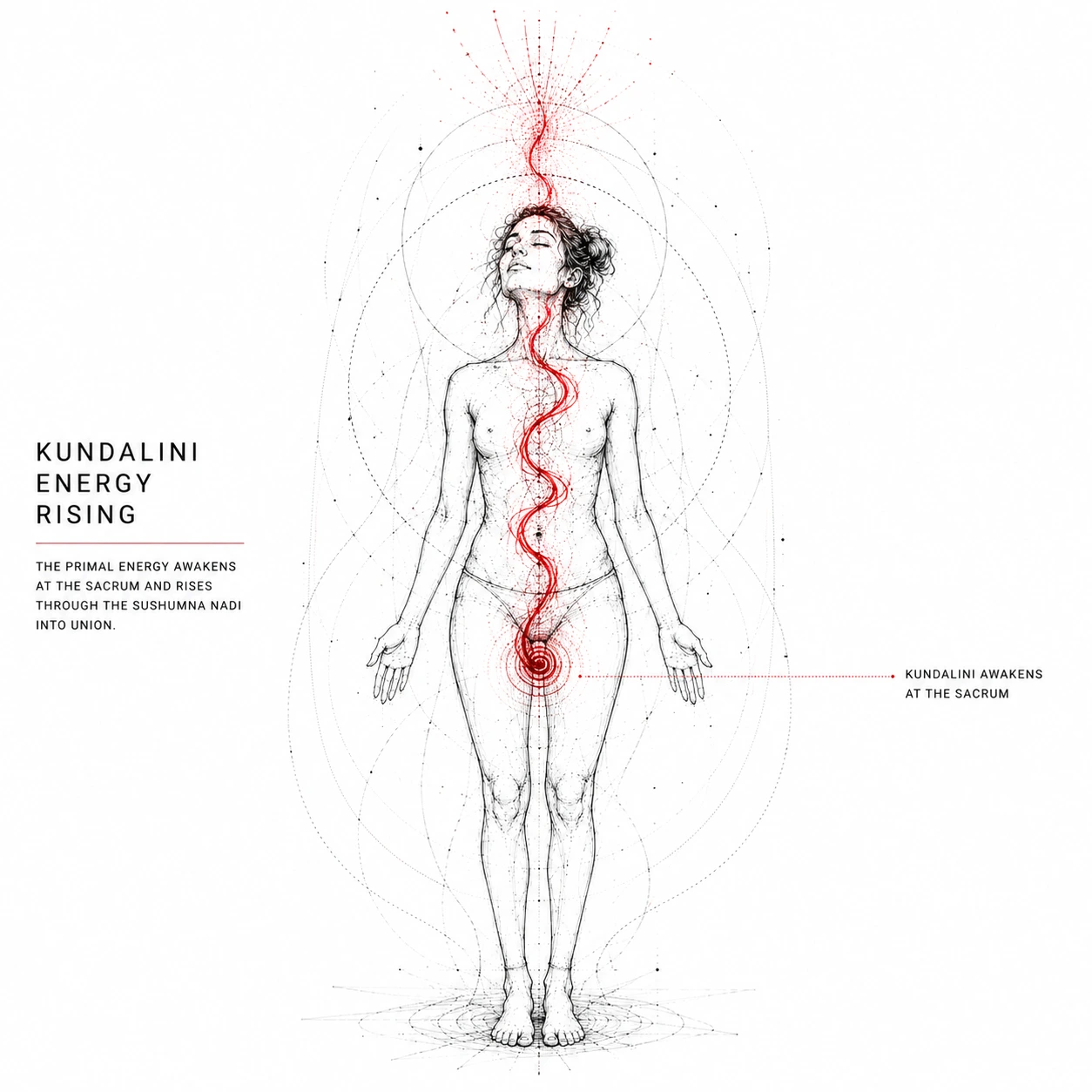
This raises an important possibility: perhaps what ancient yogis described symbolically as Kundalini awakening is not separate from the body, but emerges precisely through the body’s deepest regulatory and energetic mechanisms.
Kundalini as Evolutionary Energy
In tantric philosophy, Kundalini is not merely “energy” in the ordinary sense. It represents the evolutionary force of consciousness moving through the organism. Traditionally, this awakening occurs through meditation, breathwork, mantra, tapas, devotion, concentration, energetic practices, and years of disciplined spiritual work.
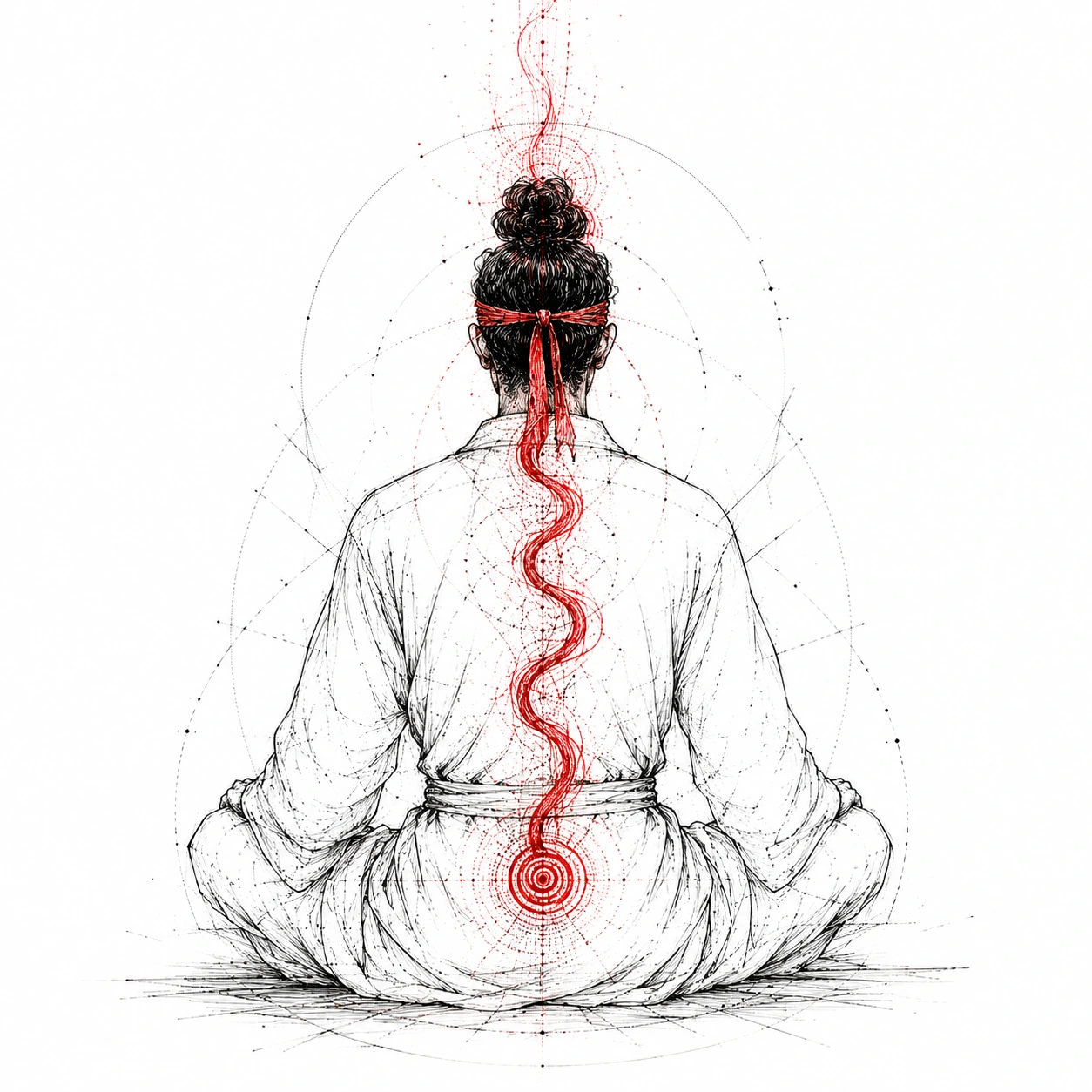
The process is often described as the ascent of energy through the central channel, activating different chakras and progressively transforming perception, identity, and awareness itself.
However, authentic traditions also warned extensively about destabilization. Kundalini was never considered a recreational spiritual experience. When the nervous system lacks grounding, regulation, embodiment, or psychological integration, awakening processes can become overwhelming, dysregulating, and psychologically destabilizing.
This is one reason many ancient systems emphasized purification, grounding, nervous system preparation, ethical development, and embodiment before attempting strong energetic activation.
The Body Remembers What the Mind Forgot
Modern somatic approaches increasingly reveal that the body possesses profound self-organizing intelligence. Tremor, shaking, spontaneous movement, breath changes, fascial unwinding, emotional release, heat generation, vibration, and involuntary muscular responses are deeply embedded biological mechanisms observed throughout mammalian life.
Animals naturally tremble after survival activation. The organism instinctively stretches, contracts, yawns, releases tension, and reorganizes itself continuously. Humans possess these same mechanisms, yet modern conditioning often suppresses them through chronic stress, emotional inhibition, overstimulation, trauma, rigid posture, and disconnection from instinctive movement.
This becomes especially relevant when discussing Kundalini phenomena because many experiences described during awakening resemble amplified forms of these natural self-regulation mechanisms.
Somatic Shaking™, Pandiculation & Kundalini Awakening
Within the Somatic Shaking™ Method, therapeutic tremor, pandiculation, breath, dynamic meditation, and energetic movement frequently create states that practitioners historically associated with Kundalini activation.
Pandiculation itself acts like a whole-body energetic expansion. Through conscious contraction followed by gradual release, the organism begins restoring communication between the nervous system, fascia, breath, and energetic perception. As chronic tension patterns soften, greater energetic fluidity emerges naturally throughout the body.
Therapeutic tremor deepens this process further. Tremors may begin reorganizing chronic contraction patterns along the spine, pelvis, diaphragm, psoas, chest, throat, and fascial lines. As the organism releases accumulated survival activation, many practitioners report sensations traditionally associated with Kundalini experiences:
- energetic currents along the spine
- spontaneous body movements
- heat and internal vibration
- expanded awareness
- emotional catharsis
- altered breathing patterns
- spontaneous mudras or postures
- heightened intuition and perception
* states of deep presence and internal aliveness
From this perspective, Kundalini awakening may not always require forceful energetic manipulation. Sometimes the organism begins awakening naturally once enough safety, fluidity, regulation, and embodied presence return to the nervous system.
Energy Transmissions (Darshan) & Nervous System Reality
Many modern spiritual systems attempt aggressive “energy manipulation” practices without fully understanding the nervous system consequences involved. Breath retention, excessive stimulation, sleep deprivation, hyperventilation, prolonged fasting, psychedelics, sensory overload, or forceful concentration practices can sometimes trigger destabilizing states mistaken for spiritual progress.
Authentic energetic work requires grounding, embodiment, emotional maturity, nervous system regulation, and integration. Otherwise, intensity can exceed the organism’s capacity to process it safely.
Within Somatic Shaking™, the approach remains fundamentally body-based. Instead of forcing awakening, the method creates conditions where the organism can reorganize organically through movement, tremor, breath, discharge, regulation, and awareness.
The goal is not spiritual performance or chasing extraordinary states, but restoring connection between body, nervous system, consciousness, and lived experience itself.
Kundalini & Embodiment
Perhaps the greatest misunderstanding surrounding Kundalini is the belief that spiritual awakening means escaping the human experience. In many cases, the real challenge is the opposite: becoming fully present inside the body without dissociation, fragmentation, or escape into abstraction.
A nervous system capable of holding more energy also requires greater grounding, regulation, embodiment, emotional capacity, and presence. Otherwise awakening becomes intensity without integration.
From this perspective, the body itself becomes the path. Tremor becomes intelligence. Breath becomes communication. Sensation becomes meditation. Movement becomes prayer.
And perhaps Kundalini, beneath all symbolism, has always been life attempting to awaken itself fully through the human organism.
Until next time… Shakers, Keep The Vibe Alive!
That Shakin' Guy