Let's Shake Hands: Free Connection Call 

Shakti: The Life Force
Table of Contents
Kundalini, Nervous System Awakening, Bioelectricity & the Ancient Science of Vital Energy
Across nearly every ancient civilization, human beings arrived at a remarkably similar intuition: life appears animated by an invisible organizing force moving beneath the surface of matter. Long before neuroscience, bioelectricity, fascia research, endocrinology, or quantum biology emerged, ancient systems attempted to describe this phenomenon through symbolic languages rooted in direct experience.
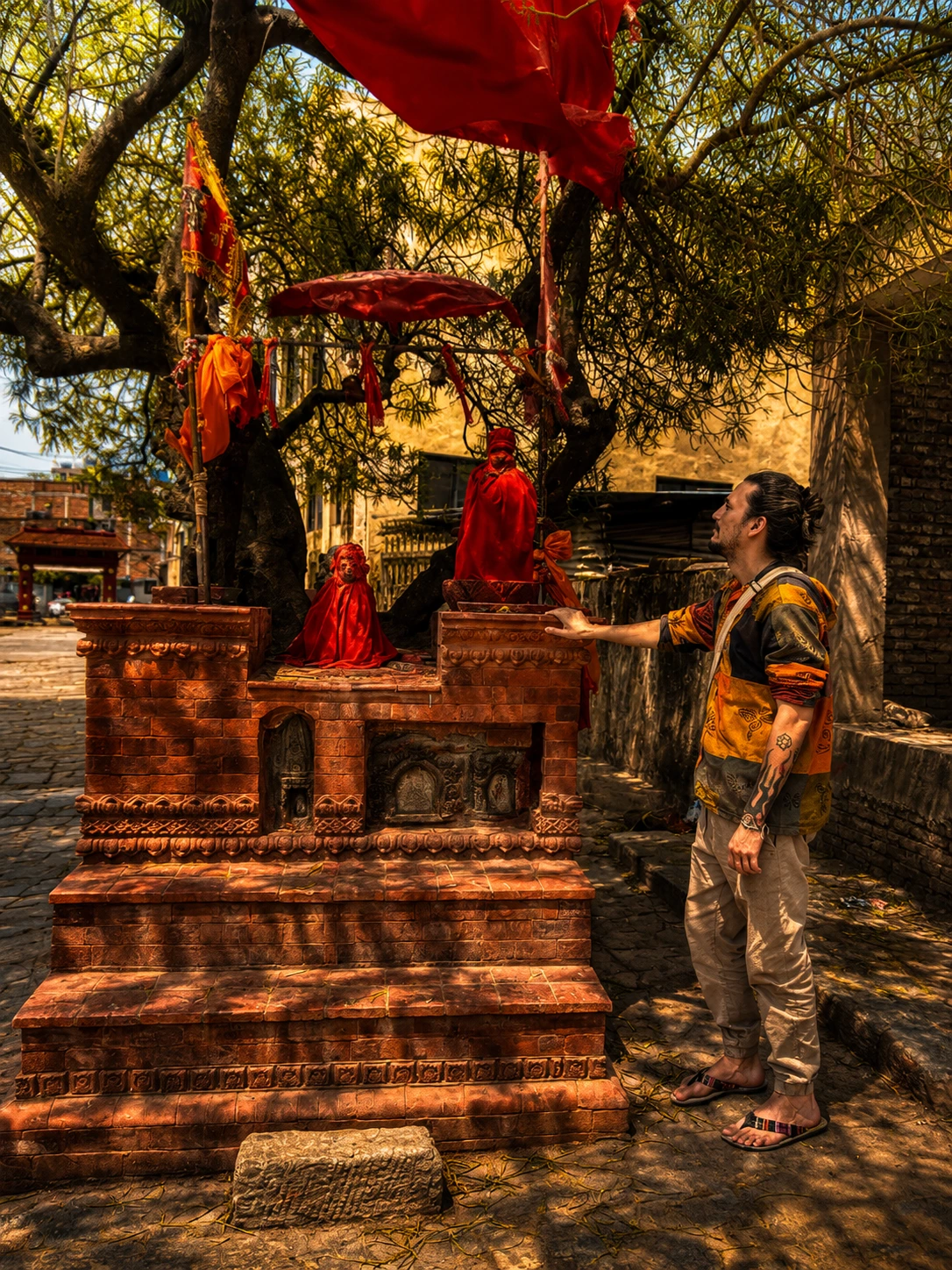
In India, this force became known as Shakti or Prana. In China, it was called Qi. In Japan, Ki. In Greek philosophy, Pneuma. In Hermetic and Western esoteric traditions, it appeared as spiritus, astral force, etheric vitality, or vital magnetism. Indigenous traditions often described it as spirit, breath, wind, or living intelligence moving through nature itself.
Although the terminology differs, the underlying observation remains surprisingly consistent: the human organism behaves as more than a purely mechanical structure. Breath alters emotion. Attention changes physiology. Movement influences consciousness. Trauma reshapes posture and perception. Energy rises and falls according to mental state, nervous system condition, environment, and internal regulation.
Ancient traditions interpreted these processes spiritually. Modern science increasingly studies them biologically. Somewhere between the two, an unexpected bridge is beginning to emerge.
What Is Shakti?
Within yogic and tantric philosophy, Shakti represents the primordial creative force of existence itself. The word can be translated as “power,” “energy,” or “dynamic consciousness.” While pure awareness is often symbolized as Shiva, Shakti represents movement, manifestation, transformation, life, sensation, creativity, sexuality, emotion, and the unfolding intelligence of nature.
In Tantra, the universe itself is viewed as the dance between consciousness and energy, stillness and movement, witnessing awareness and living embodiment. Human beings are understood not as separate from this process, but as expressions of it.
At the biological level, this becomes deeply relatable. Every heartbeat, nerve impulse, muscular contraction, hormonal shift, breath cycle, emotional reaction, and cognitive process depends upon movement of energy within the organism. The human body is fundamentally electrical, rhythmic, oscillatory, and dynamic.
Modern neuroscience reveals that thought itself emerges through electrochemical signaling. Fascia transmits mechanical information throughout the body. The heart generates measurable electromagnetic fields. Brainwave states shift according to attention, breath, meditation, emotion, and sensory input. The nervous system continuously exchanges information through vibration, pressure, rhythm, and conductivity.
Perhaps ancient yogis were not entirely speaking metaphorically.
Kundalini & The Evolutionary Force Within the Body
One of the most famous expressions of Shakti in yogic philosophy is Kundalini, often symbolized as a coiled serpent resting at the base of the spine. Traditionally, Kundalini represents dormant evolutionary potential capable of awakening consciousness and transforming human perception.
Descriptions of Kundalini awakening across centuries consistently include phenomena such as:
- involuntary tremors
- spontaneous body movements
- energetic currents along the spine
- altered breathing patterns
- expanded awareness
- emotional catharsis
- heat generation
- spontaneous postures or mudras
- changes in perception and identity
- intensified intuition and sensory sensitivity
Interestingly, many of these experiences strongly resemble processes now studied within somatics, psychophysiology, trauma release, autonomic nervous system regulation, fascia science, and embodied cognition.
This raises an important question: what if many spiritual awakenings are not separate from biology, but emerge precisely through the nervous system and body?
The East Described Energy. The West Studied Physiology.
Eastern systems developed symbolic maps such as:
- chakras
- nadis
- vayus
- koshas
- meridians
- tantric anatomy
Meanwhile, Western science explored:
- the autonomic nervous system
- neuroplasticity
- vagal tone
- fascia networks
- psychoneuroimmunology
- bioelectric signaling
- embodied trauma
- endocrine regulation
At first glance these worlds appear incompatible. Yet many observations overlap remarkably. Ancient yogis observed that breath alters consciousness. Modern neuroscience confirms breathing patterns directly influence emotional regulation, vagal tone, cardiovascular rhythms, and stress physiology. Tantric systems described energetic blockages. Somatic psychology describes chronic contraction patterns, trauma fixation, and nervous system dysregulation.
Eastern traditions emphasized spinal energy ascent. Modern anatomy reveals the spine as a massive communication highway linking movement, sensation, autonomic regulation, and consciousness.
Until next time… Shakers, Keep The Vibe Alive!
That Shakin' Guy