Let's Shake Hands: Free Connection Call 

Are Tremors Normal With Anxiety?
Table of Contents

Yes, tremors are a completely normal biological response to anxiety. When the brain detects a threat, it triggers a fight-or-flight response, flooding the body with adrenaline and cortisol. Shaking is your Autonomic Nervous System’s way of discharging this excess survival energy to prevent trauma from becoming trapped in the fascia and muscles.
For many people, however, this experience feels confusing, sometimes even alarming, because the body appears to lose control while the mind attempts to maintain it. What often goes unrecognized is that this shaking represents an intelligent physiological process rather than a malfunction, a built-in mechanism designed to restore balance after activation.

Why Does My Body Shake When I’m Anxious? (The Biological Reset)
When anxiety arises, the nervous system prepares the body for immediate action, even in situations where no physical movement follows. The heart rate increases, breathing changes, muscles tighten, and energy mobilizes throughout the organism in anticipation of movement.
At the center of this response lies the psoas muscle, often referred to as the primary fight-or-flight muscle, which contracts deeply within the core of the body during stress. This contraction supports survival readiness, yet when the activation remains incomplete, the tension lingers in the system.
Shaking appears as the body’s natural solution.
Through rhythmic micro-contractions, tremors allow the nervous system to release this stored activation, gradually softening muscular tension, regulating breathing patterns, and restoring internal equilibrium. This process, often described as neurogenic tremoring, reflects a biological reset mechanism that exists across all mammals.
In natural environments, animals regularly shake after stressful events, allowing their systems to return to baseline quickly. Human physiology follows the same design, yet social conditioning often interrupts this release, encouraging stillness and control at the exact moment when movement would support recovery.
From a neurological perspective, tremors signal that the body is actively attempting to regulate itself.
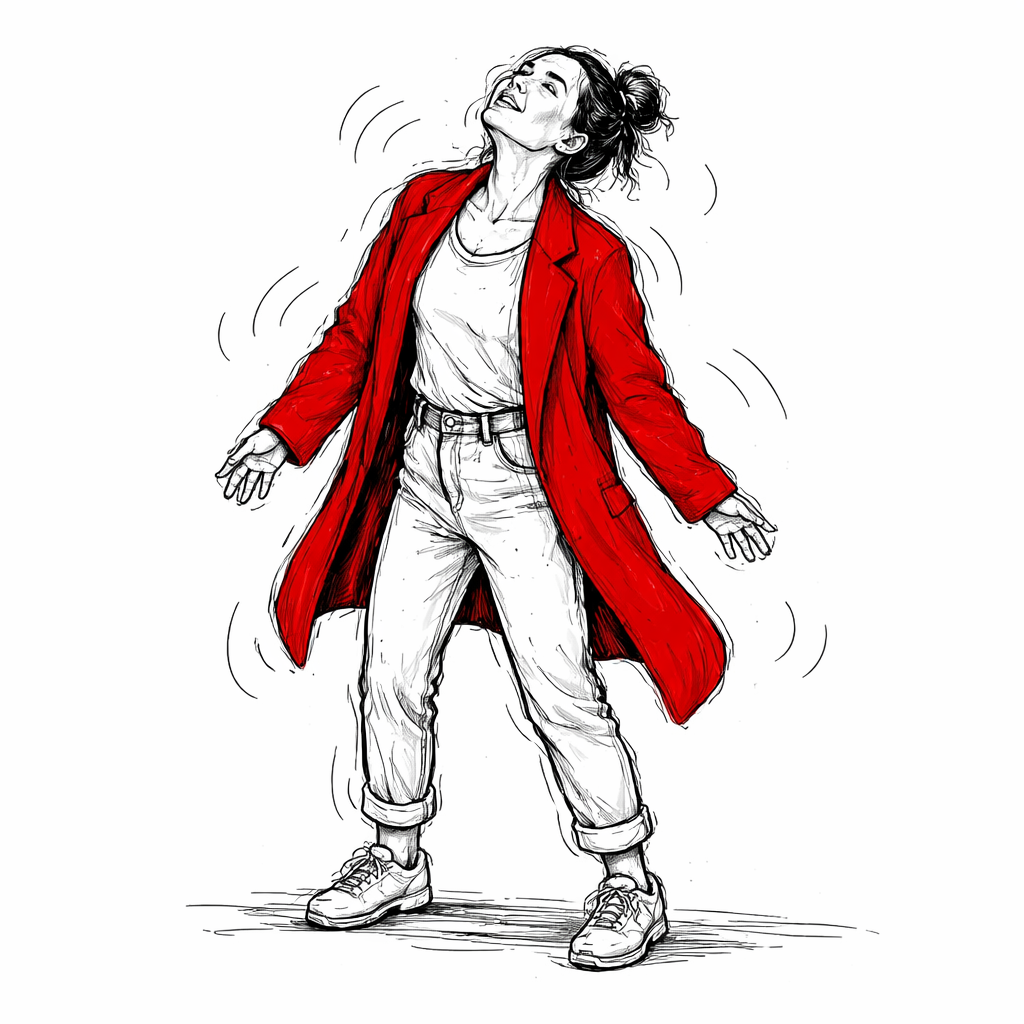
From Reactive Shaking to Therapeutic Release: A 3-Stage Approach
Most people encounter shaking as a reactive experience, where tremors arise unexpectedly during moments of anxiety, stress, or emotional overwhelm. In this phase, the shaking may feel unfamiliar or even uncomfortable, because it appears outside of conscious control.
With awareness and practice, however, this same mechanism can become therapeutic.
The transition unfolds through a progressive three-stage approach:
- Noogenic Shaking represents an intentional, rhythmic form of movement, usually initiated through the legs and supported by breath, where the practitioner actively engages the body in oscillatory motion that mobilizes circulation, increases internal heat, and disrupts patterns of muscular holding. This form of shaking creates space in the system, awakens areas that have become rigid, and establishes a foundation of safety through controlled movement.
- Neurogenic Shaking appears as a spontaneous, involuntary tremoring response, where the body begins to release stored survival activation without deliberate control. In this mode, the shaking often feels fluid, wave-like, and self-organizing, reflecting the nervous system’s inherent capacity to discharge tension, regulate itself, and restore equilibrium when given the right conditions.
- Kundalini Shaking expresses a more subtle and expansive dimension of movement, where the experience includes a sense of energy traveling through the body, often along the spine, accompanied by heightened awareness, internal coherence, and a deeper connection between physiology and perception. This mode does not depend on intensity, but rather on sensitivity and the body’s ability to sustain and integrate internal flow.
Through this progression, shaking transforms from a reactive symptom into a deliberate pathway for regulation.


Clarity Session · 45 min
Start with one clear conversation.
Before you commit to a deeper process, we look at where your nervous system, emotional patterns, body tension, and life direction are asking for change.
A focused 1:1 session to help you understand what is really happening beneath the surface — and what your next embodied step can be.
Book Your Clarity Call →Until next time… Shakers, Keep The Vibe Alive!
That Shakin' Guy

Adrian Băjenaru
Somatic Shaking™ Method Founder • Neurogenics & Bioenergetics