Let's Shake Hands: Free Connection Call 

neurogenic shaking
Neurogenic shaking, also known as ‘essential‘ or ‘autogenic tremor’, is the body’s intrinsic discharge mechanism, a self-organizing process of the nervous system through which accumulated activation, tension, and incomplete survival responses are released without conscious control.
At its core, it emerges from the deep intelligence of the autonomic nervous system, especially when the organism transitions from a state of contraction (fight, flight, or freeze) toward restoration. Instead of resolving stress through thought or interpretation, the body resolves it through oscillation, rhythmic contractions and releases that travel through muscles, fascia, and the psoas, often perceived as tremors or spontaneous shaking.
From a neurophysiological perspective, this process reflects a recalibration of neural firing patterns and muscular holding loops. When the system no longer needs to maintain defensive tension, inhibitory pathways soften, and motor patterns that were previously suppressed begin to express themselves. The shaking is not random at all, it is patterned, efficient, and directed by subcortical structures that operate below conscious cognition.
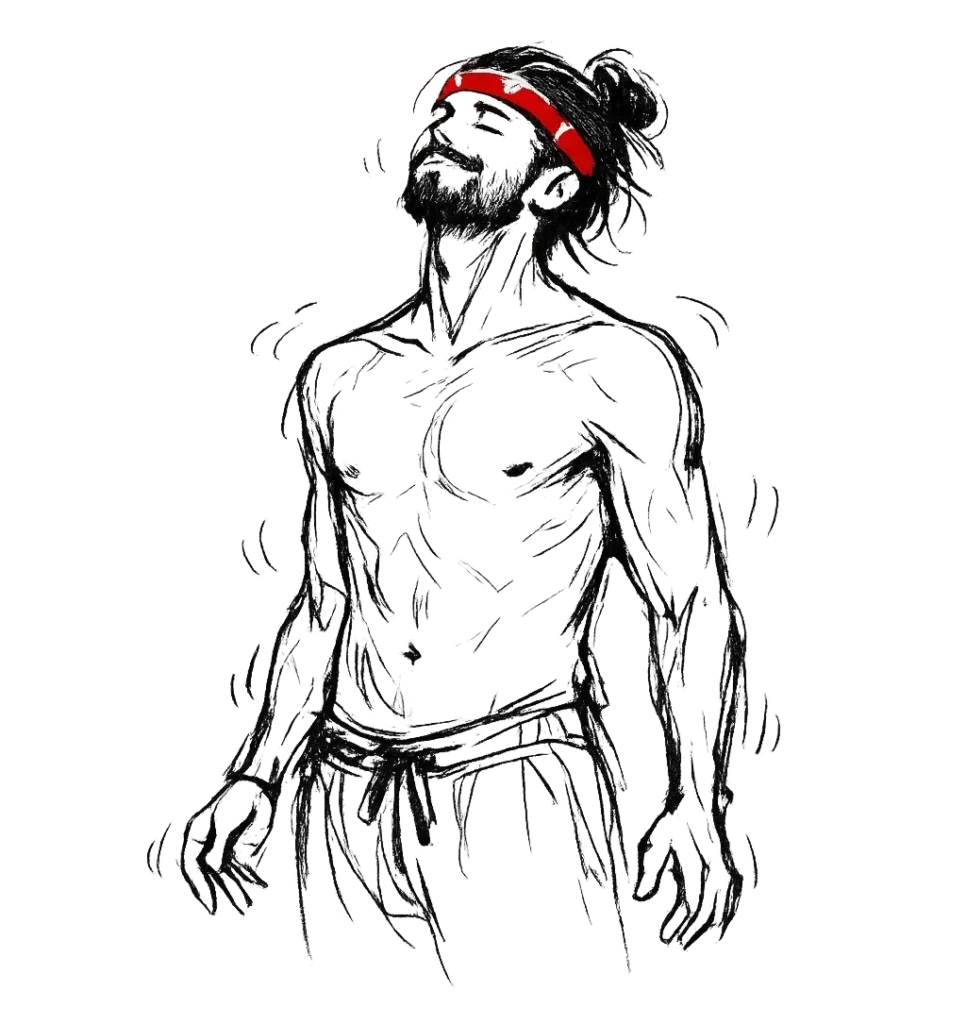
At a deeper level, neurogenic shaking reflects the completion of interrupted biological sequences. Stress responses that were once activated and held in the system, through suppression, conditioning, or overwhelm, remain as latent tension in the body. The tremor allows these cycles to discharge and reorganize, restoring fluidity and coherence.
An important nuance here is that the shaking is not always perceived as immediately relieving. At times, the body releases in layers, and what surfaces can feel intense or unfamiliar. This is often misunderstood and quickly labeled, when in reality the system is in the middle of a reorganization process rather than dysfunction.
In more integrative terms, this is where physiology and awareness meet. The body releases, and consciousness witnesses. As the oscillation unfolds, the line between voluntary control and involuntary intelligence becomes thinner, pointing to a simple principle:
You are not broken, your body needs to be allowed to finish what it started.
From direct work with people, this process often leads to states of release that are rare and difficult to access through cognitive methods alone. There is a depth of letting go that clients recognize instantly, without needing explanation.
As one client described after a single session:
“I had years of classical therapy, yet nothing had the impact of this experience in just one session. Through breath, movement, and shaking, I was able to release deep patterns—fear of failure, inherited shame, guilt, old emotional loops, even the belief that love must be earned.”
Trauma is not only in the mind, it is stored in the body, and from there, it can be released.
— Andreea Purcaru @andreeacriss111
Anatomy of Somatic Shaking
Comparative Ethology
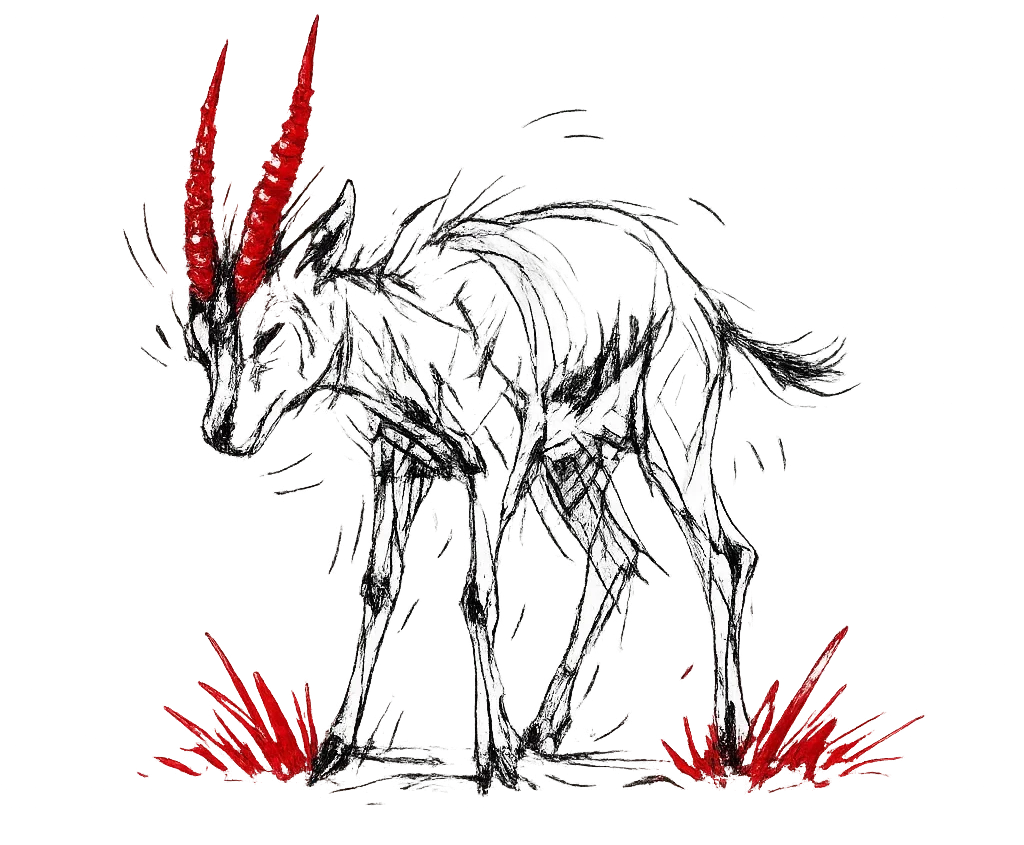
Somatic shaking is not a human invention. It is a conserved biological response observed across mammals. After a threat, animals spontaneously enter a phase of trembling, brief, rhythmic contractions that move through the body, often starting in the core and spreading outward.
A gazelle escaping a predator will shake once the danger has passed. Dogs tremble after a stressful event. This is not pathology, it is completion. The nervous system discharges excess activation and returns to baseline without carrying residual tension.
Humans possess the same mechanism, yet social conditioning suppresses it early. Instead of allowing the discharge, the body learns to inhibit these movements, storing incomplete activation in muscles, fascia, and autonomic patterns.
What Happens Scientifically
From a physiological standpoint, somatic shaking reflects a transition between sympathetic activation and parasympathetic regulation.
During stress:
- Neural firing increases
- Muscles contract (especially psoas, diaphragm, spinal stabilizers)
- Fascia stiffens to support defensive posture
When safety is re-established:
- Cortical inhibition reduces (less top-down control)
- Subcortical circuits (brainstem, limbic system) activate rhythmic motor patterns
- Oscillatory contractions discharge excess neural excitation
- Myofascial tension begins to release in waves
- Vagal tone increases, supporting breath depth and regulation
The tremor is a neuromuscular reset. It reorganizes firing patterns, releases stored charge, and restores adaptive flexibility to the system.
An important nuance: this process is not always linear or immediately pleasant. The nervous system often releases in layers, and sensations can feel intense or unfamiliar. This is frequently misinterpreted, while in reality the organism is actively recalibrating.
In essence, somatic shaking is the body’s way of resolving unfinished survival responses, through movement, not through analysis.
Neurogenic Shaking
This is the shift from effort to autogenic release. In this phase, the tremor becomes involuntary and begins to support the natural discharge of stored survival stress from the nervous system.
The Vagus Connection
Shaking stimulates the vagus nerve and helps the body move into a more regulated parasympathetic state.
The Psoas Pulse
The tremor often emerges through the core and psoas, where deep protective tension is commonly held.
Homeostasis
As the body releases naturally, it returns toward balance, completion, and a steadier internal baseline.
OUR APPROACH TO NEUROGENIC SHAKING
In this method, neurogenic shaking is not forced, it is invited.
We begin with a few minutes of dynamic shaking, using voluntary movement to mobilize the body, increase circulation, and gently open the energetic and muscular systems. This phase helps shift the system out of rigidity and into responsiveness, preparing the ground for deeper release.
From there, we transition into specific positions designed to facilitate involuntary tremors. These can be practiced:
- lying on the ground
- standing
- or seated on a chair
Each posture creates a different angle of activation in the body, especially through the psoas, hips, and spine, allowing the tremor response to emerge naturally.
As the body begins to shake on its own, the role shifts from doing to allowing. The system takes over, guiding the intensity, rhythm, and duration of the release.
This progression, from voluntary movement to involuntary response—bridges conscious participation with the body’s deeper intelligence, making the process both accessible and deeply effective.