Let's Shake Hands: Free Connection Call 

Somatic Shaking™
Pandiculation Practice
What Pandiculation Is
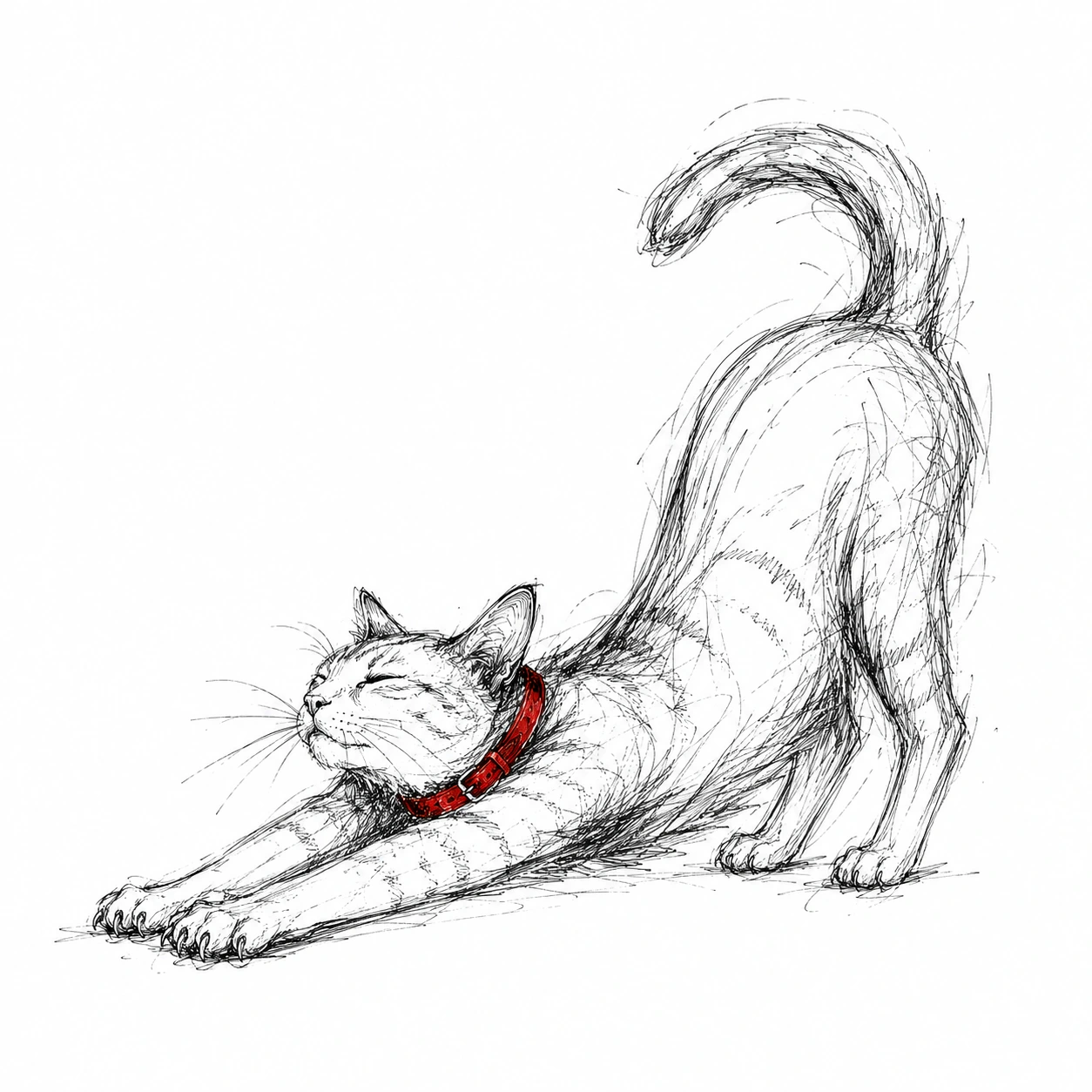
Pandiculation is a natural, involuntary stretching of soft tissues observed across most animal species, characteristically associated with transitions between cyclic biological states, particularly the sleep-wake rhythm (Walusinski, 2006). The most common example is the stretch and yawn that occurs upon waking.
Yawning represents a specialized form of pandiculation affecting the musculature of the mouth, respiratory system, and upper spine (Baenninger, 1997). When yawning occurs simultaneously with pandiculation in other body regions, the combined behavior is termed the stretch-yawning syndrome (SYS) (Bertolini & Gessa, 1981; Lehmann, 1979; Urba-Holmgren et al., 1977).
In Somatic Shaking™, pandiculation functions as a deliberate tool to trigger the tremor response and systematically address chronic muscle tension while restoring nervous system control.

The technique involves three sequential phases: slow intentional muscle contraction, concentric contraction, sustained engagement, and gradual release while muscles actively lengthen, eccentric contraction. This sequence engages the nervous system's own learning mechanisms rather than imposing external movement.
As the neurogenic movements release deep layers of chronic tension, the nervous system instinctively triggers a reset. You might experience this as a deep, involuntary stretch or a yawn. This is your body’s way of remapping the muscles, restoring balance, and integrating the relaxation achieved during the session.
The Neurological Basis: The Gamma Loop and Sensorimotor Amnesia
Chronic muscle tension is regulated by the gamma loop, a feedback system within the nervous system that continuously monitors and adjusts muscle contraction levels. This regulatory mechanism evolved to maintain postural stability and efficient movement patterns.
When repetitive movements or sustained postures become habitual, the nervous system encodes these patterns as learned motor habits. The gamma loop establishes a new set point, a baseline tension level that the nervous system maintains continuously, even at rest. The muscles remain partially contracted, and voluntary control diminishes. Neuroscientists refer to this condition as sensorimotor amnesia (Warren, 2023).
How Pandiculation Resets the Gamma Loop
Pandiculation works by delivering corrected biofeedback directly to the gamma loop. During a pandiculation, the nervous system receives precise sensory information about the muscle's actual state: its length, tension capacity, and potential for conscious control. This information is critical; stretching alone does not reset the gamma loop because it bypasses the nervous system's active learning mechanism.
The voluntary contraction phase is essential. By consciously contracting the muscle, then slowly releasing it while maintaining awareness, the individual sends corrected feedback to the gamma loop. The nervous system recalibrates its baseline tension downward. Chronic contraction releases. Voluntary control returns.
This is why pandiculation differs fundamentally from passive therapies: the individual generates the movement. The nervous system learns through its own actions, not through external manipulation. Each repetition provides reinforced, corrected feedback about proper tension levels.
Pandiculation and Myofascial System Integrity
Contemporary biomechanics recognizes that the myofascial system functions as an integrative network. Muscle force is transmitted through fascial structures well beyond the tendinous attachments of individual muscles, linking body parts into coordinated, whole-system movement (Huijing & Jaspers, 2005). This interconnected architecture means that tension or dysfunction in one region propagates throughout the system.
Pandiculation itself can be a natural solution for chronic pain and stress, as Heidi Hadley suggests on TED Talks.
SYS appears to serve functions beyond arousal. Emerging evidence suggests that pandiculation maintains the structural and functional equilibrium of the myofascial system itself (Bertolucci, 2011). Pandiculation appears to serve two critical functions for this integrated system:
- Developing and maintaining appropriate physiological fascial interconnections: Regular pandiculation preserves the structural relationships within the myofascial network, ensuring efficient force transmission across the body.
- Modulating pre-stress state through tonic musculature activation: Pandiculation regularly engages the muscles that maintain baseline posture and tension, resetting their resting state to functional baselines.
Pandiculation as a Tool in Somatic Shaking™
Within Somatic Shaking™ practice, pandiculation serves as a deliberate mechanism to initiate or deepen the tremor response. By first contracting muscle groups intentionally and then releasing them slowly and consciously, practitioners create the conditions for spontaneous shaking to emerge. The voluntary contraction phase wakes up the nervous system and sensorimotor awareness, allowing the subsequent involuntary tremor to access deeply held tension patterns more effectively.
Pandiculation can also arise naturally as an effect of Somatic Shaking™ practice. People often begin to yawn, sigh, make small spontaneous sounds, stretch, or move in ways that feel instinctive and relieving. These responses are not random. They are signs that the body is beginning to release tension and reorganize itself from the inside.
Of course, pandiculation can also be encouraged through specific positions, gentle movement patterns, and intentional somatic cues. But in many cases, it appears on its own when the nervous system starts to soften, reset, and return to a more natural rhythm.
Practitioners learn specific sequences of pandiculation targeting particular muscle groups and habitual postural patterns. Because the practice remains self-directed and voluntary, individuals become active agents in their own neuromuscular re-education rather than passive recipients of treatment.
The neural reflexes characteristically evoked through pandiculation within Somatic Shaking™ are reminiscent of the spontaneous SYS response, suggesting that the method stimulates parts of the natural stretch-yawning reaction while offering a systematized approach to myofascial reset and nervous system retraining.
Outcomes
When the gamma loop resets through pandiculation and the myofascial system is regularly restored to functional equilibrium:
Chronic muscular tension releases naturally
Conscious, voluntary control over muscles is restored
Sensory awareness of the body improves
Fascial interconnections maintain appropriate structural relationships
Movement efficiency and coordinated integration increase
Pain associated with chronic tension typically resolves
Why This Mechanism Matters
Most conventional approaches to chronic pain, pharmaceutical intervention, surgery, passive manipulation, do not address the underlying neurological and myofascial mechanisms. Pandiculation engages the systems that created the problem: the learned patterns encoded in the nervous system and the structural dysfunction within the myofascial network.
By using voluntary, conscious movement to reset the gamma loop and restore myofascial integrity, Somatic Shaking™ enables the nervous system and muscular system to unlearn habitual tension patterns. This produces lasting change because the structural and neurological basis of dysfunction has been addressed.
Research Evidence
Clinical Outcomes Study
A 2022 peer-reviewed study examined voluntary pandiculation in the context of Clinical Somatic Education in 103 patients with chronic lower back pain, neck pain, or both, pain duration exceeding two months. Patients completed between two and five private sessions over 2-8 weeks, taught by a certified educator, followed by home practice. Pain was measured using the Wong-Baker FACES Pain Rating Scale, 0-5.
Pain reduction after mean of 2.8 sessions:
- Lower back pain: 81% reduction, 3.3 → 0.6
- Neck pain: 80% reduction, 3.1 → 0.6
- Combined lower back and neck pain: 79% reduction, 3.4 → 0.7
Six-month follow-up outcomes:
- Pain medication use decreased 73.5% overall, 53 → 14 patients
- Lower back pain patients: 87.5% reduction in medication use
- Neck pain patients: 73% reduction in medication use
- Doctor visits decreased from mean of 2 to 0.5 per six-month period, 75% reduction overall
Researchers concluded that voluntary pandiculation is “an effective and sustainable method of reducing spinal pain” and recommended further investigation into its application for various chronic musculoskeletal conditions (Huang et al., 2022).
Myofascial System Perspective
A theoretical analysis examining pandiculation's role in myofascial health proposed that SYS functions beyond arousal to maintain myofascial integrity. The research suggests pandiculation preserves the integrative role of the myofascial system by developing appropriate fascial interconnections and modulating the baseline tension state of postural muscles (Bertolucci, 2011). This mechanism aligns with clinical observations from movement practices that employ neural reflexes reminiscent of the stretch-yawning syndrome.
References
- Baenninger, R. (1997). On yawning and its functions. Psychonomic Bulletin & Review, 4(2), 198-207.
- Bertolini, G., & Gessa, G. L. (1981). Yawning: Its role in the wake-sleep cycle. In S. Kotani (Ed.), Neuronal plasticity and reorganization of the CNS (pp. 197-206). Elsevier Biomedical Press.
- Bertolucci, B. (2011). Pandiculation: Nature's way of maintaining the functional integrity of the myofascial system. Journal of Bodywork and Movement Therapies, 15(3), 264-280.
- Huang, Q., et al. (2022). Effect of Hanna Somatic Education on low back and neck pain levels. Journal of Bodywork and Movement Therapies, 32, 103-111.
- Huijing, P. A., & Jaspers, G. W. (2005). Adaptation of muscular skeletal system to loading and its role in pathophysiology of heart failure. Journal of Applied Physiology, 99(5), 1592-1597.
- Lehmann, H. E. (1979). Yawning: A homeostatic reflex and its psychological significance. Bulletin of the Menninger Clinic, 43(2), 123-136.
- Urba-Holmgren, R., Holmgren, B., Rodriguez, R., Solis, H., & Rodriguez, E. (1977). The synchronized sleep-related discharge of identified neurons in the feline brain and its relation to behavior. Electroencephalography and Clinical Neurophysiology, 42(4), 454-466.
- Walusinski, O. (2006). Yawning: Unsolved problems about the physiological mechanism. In O. Walusinski (Ed.), The mystery of yawning in physiology and disease (pp. 1-17). Karger Publishers.
- Warren, S. (2023). The pain relief secret: How to retrain your nervous system, heal your body, and overcome chronic pain. Somatic Movement Center.