Let's Shake Hands: Free Connection Call 

Understanding The Smooth Muscle
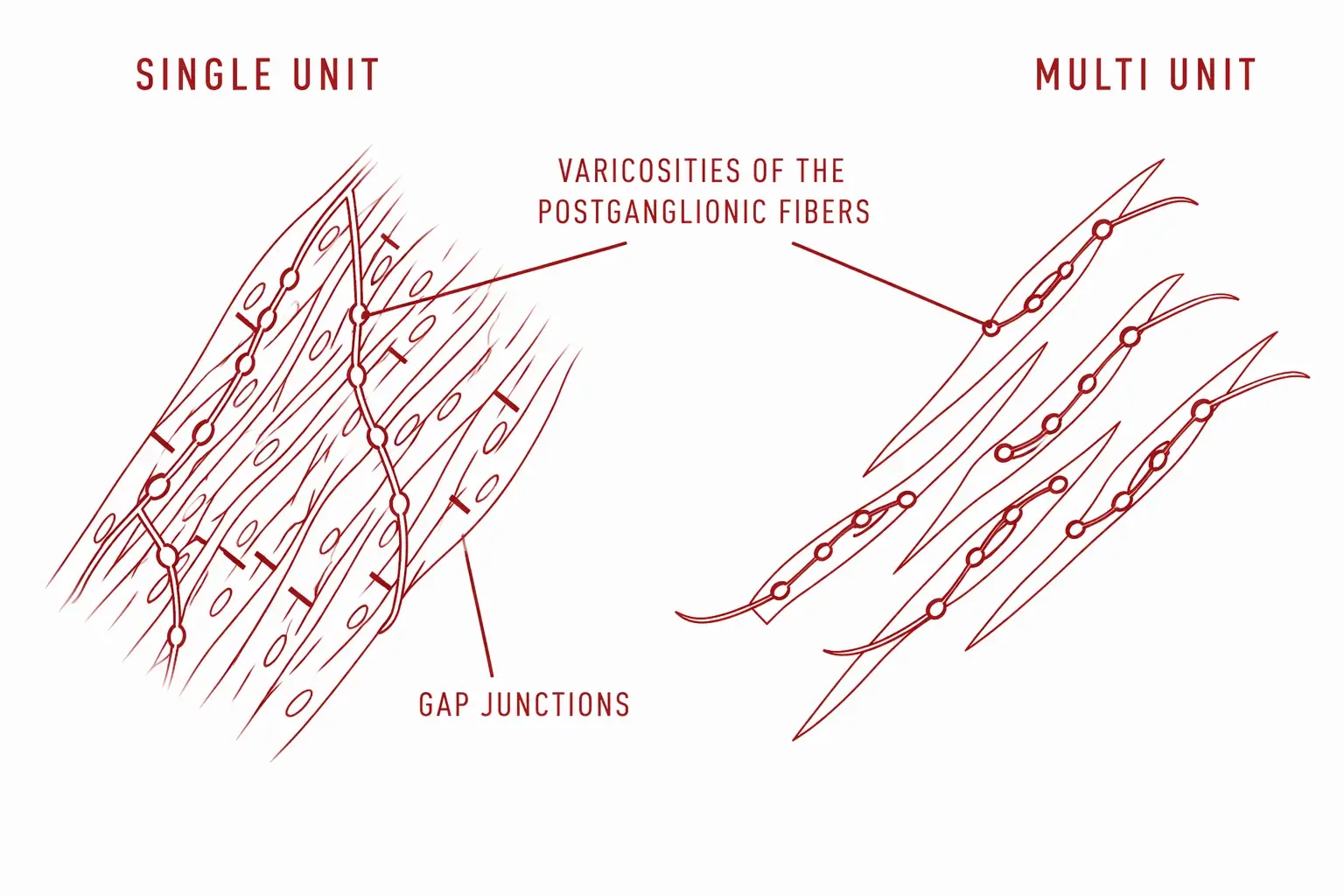
Smooth muscle is controlled by the autonomic nervous system and works without conscious effort. Its cells are spindle shaped, have a single nucleus, and lack striations.
There are two main types:
- Single unit smooth muscle, found in organs like the gut, bladder, and reproductive system, contracts as a group through connections between cells, and can activate without direct nerve input.
- Multi unit smooth muscle, found in blood vessels, airways, and the eyes, works with individual cells controlled by nerve signals, allowing more precise regulation.
This relates to somatic shaking through the same underlying mechanism. The autonomic nervous system drives involuntary activity, and changes in its state can trigger waves of activation across muscle tissue. These signals move through the body as coordinated or localized contractions, which are experienced as shaking.
Until next time… Shakers, Keep The Vibe Alive!
That Shakin' Guy