Let's Shake Hands: Free Connection Call 

Understanding The Sympathetic Response
The sympathetic nervous system is a branch of the autonomic nervous system that prepares the body for stress or emergency. It works mainly through adrenergic fibers and increases the activity of cardiac muscle, while in smooth muscle it can reduce tone and contractility depending on the tissue.
It is known as the “fight, flight, or freeze” response and produces clear physiological changes:
- Increased release of stress hormones
- The heart pumps more blood to the muscles to support energy demand
- Breathing rate rises to supply more oxygen
- Pupils dilate to improve vision
- Digestive activity slows down
- Sweating increases
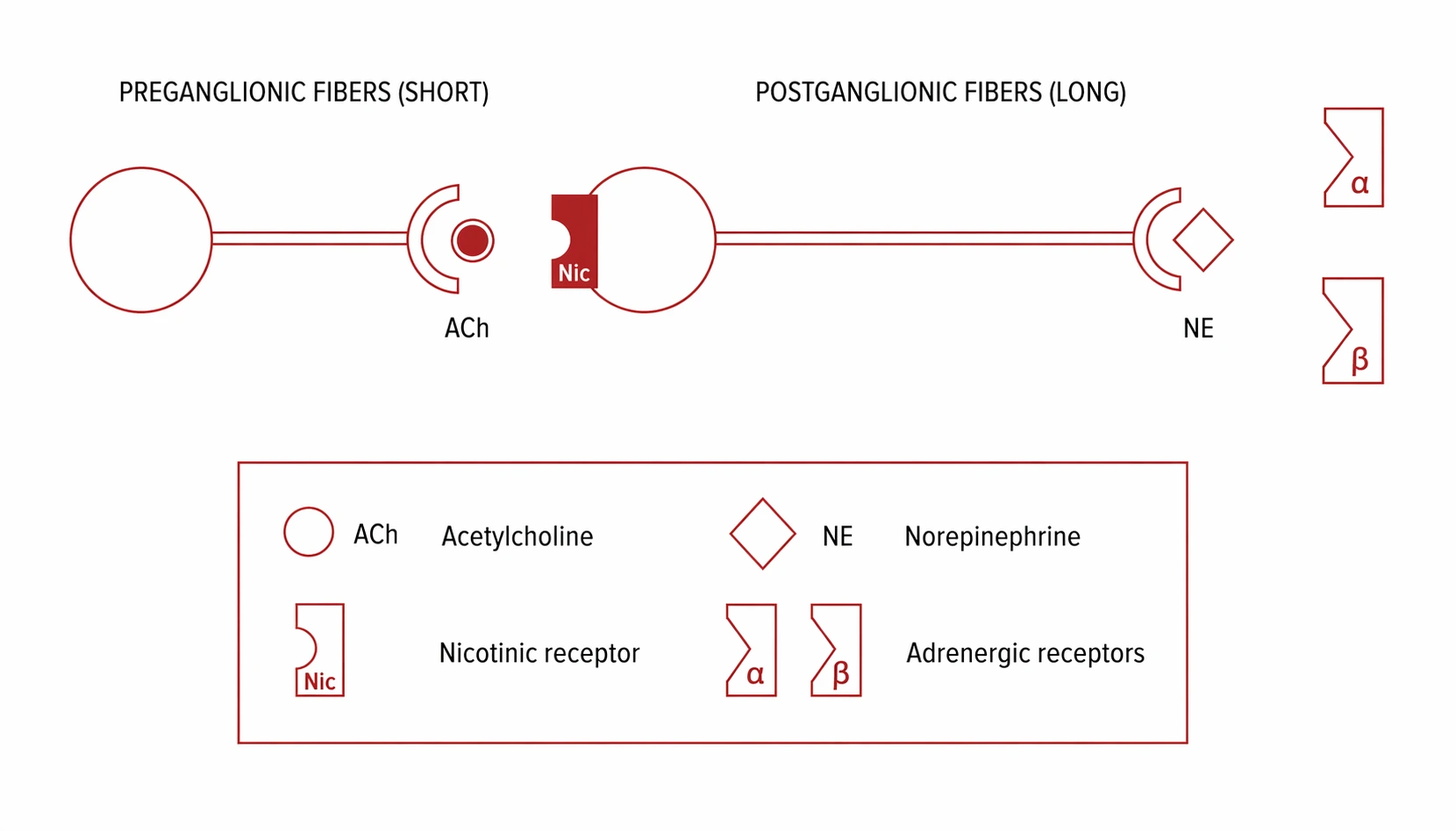
Structurally, it includes preganglionic and postganglionic fibers connected through ganglia. Preganglionic fibers are short, while postganglionic fibers are longer.
Two neurotransmitters operate in the sympathetic nervous system. Preganglionic fibers release acetylcholine, which binds to nicotinic receptors on postganglionic neurons. Postganglionic fibers release norepinephrine, which binds to adrenergic receptors in the target organs.
This signaling pathway drives activation in the body and directly influences muscle tone, heart rate, and internal states. When this activation rises and then begins to discharge, it can produce rhythmic signals that reach the muscles. These signals show up as involuntary contractions in neurogenic shaking, or can be amplified through voluntary input in dynamic shaking. In practices like kundalini shaking, the same activation moves through the system in a more global and sustained pattern, engaging both neural and energetic layers.
Until next time… Shakers, Keep The Vibe Alive!
That Shakin' Guy