Let's Shake Hands: Free Connection Call 

The Healing Power of Ecstatic Movement & Somatic Shaking
Table of Contents
- Why we’re the only animals that don’t shake after a scare
- What traditional cultures understood that we’ve forgotten
- Why shaking isn’t meditation, and why you may need both
- What it looks like in practice: nine steps without unnecessary mysticism
- What actually happens in your body when you shake
- “Talking doesn’t cook the rice,” my Qigong teacher used to say.
I’ve seen people spend years on a therapist’s couch, take medication, meditate faithfully every morning and evening, and still carry tension in their bodies that no conversation could reach.
Not because conventional therapy is wrong or meditation isn’t valuable, but because the tension they felt wasn’t held in words or thoughts. It was more tangible than you might think: it was in their muscles, in compromised fascia, and in the autonomic response of a nervous system that was never allowed to finish what it started.
The body knows how to heal itself, and that isn’t a motivational slogan. It’s a physiological reality that modern medicine is only beginning to recognize in its full complexity. The fundamental problem isn’t that we lack internal resources for healing; I know from personal experience that our bodies have them in abundance. The problem is that we’ve been systematically taught to suppress them. You know those voices that never seem to go quiet? Even if they’re remnants of a world that’s fading away, they’re still alive in your subconscious: “Don’t smile right now!” or “That’s not allowed!” Years of repressing natural impulses that you wanted to express as a child have led you to place those same impulses in the category of taboo behavior.
Why we’re the only animals that don’t shake after a scare
If you’ve ever watched a dog after a frightening moment, or a horse after it has been startled, you know exactly what comes next: a brief, vivid tremor that moves through the entire body from head to tail. This shaking isn’t evidence of weakness, and it isn’t a symptom that needs to be investigated. It’s physiology in action. It’s the nervous system discharging the activation energy mobilized for fight or flight, energy that, without this natural release, can remain trapped in the body and gradually become what we call chronic stress.
Somewhere along the course of civilization, we humans interrupted this process. We trained ourselves to remain still in the face of difficulty, to be stoic, and to “control” our emotions and physical expressions as a sign of maturity and professionalism. We pay for that suppression in forms we now recognize under different labels: burnout, generalized anxiety, chronic muscle tension, persistent insomnia, and back pain with no clear structural cause.
This is the central premise of Dr. Bradford Keeney’s Shaking Medicine: The Healing Power of Ecstatic Movement, a book that isn’t about a new wellness trend and doesn’t promote a recently invented method. Instead, it documents something much older and more essential: the human body’s innate right to release through spontaneous movement.
What traditional cultures understood that we’ve forgotten
Keeney is a serious scholar with decades of genuine fieldwork behind him: an anthropologist and therapist who lived alongside the San people of the Kalahari, studied African American spiritual communities, and documented Japanese healing traditions from within. He isn’t speaking from an academic armchair or building theories solely from library research.
What he documented over those decades is remarkably consistent: every culture that has preserved an authentic, uninterrupted relationship with the body has some form of somatic release through movement.
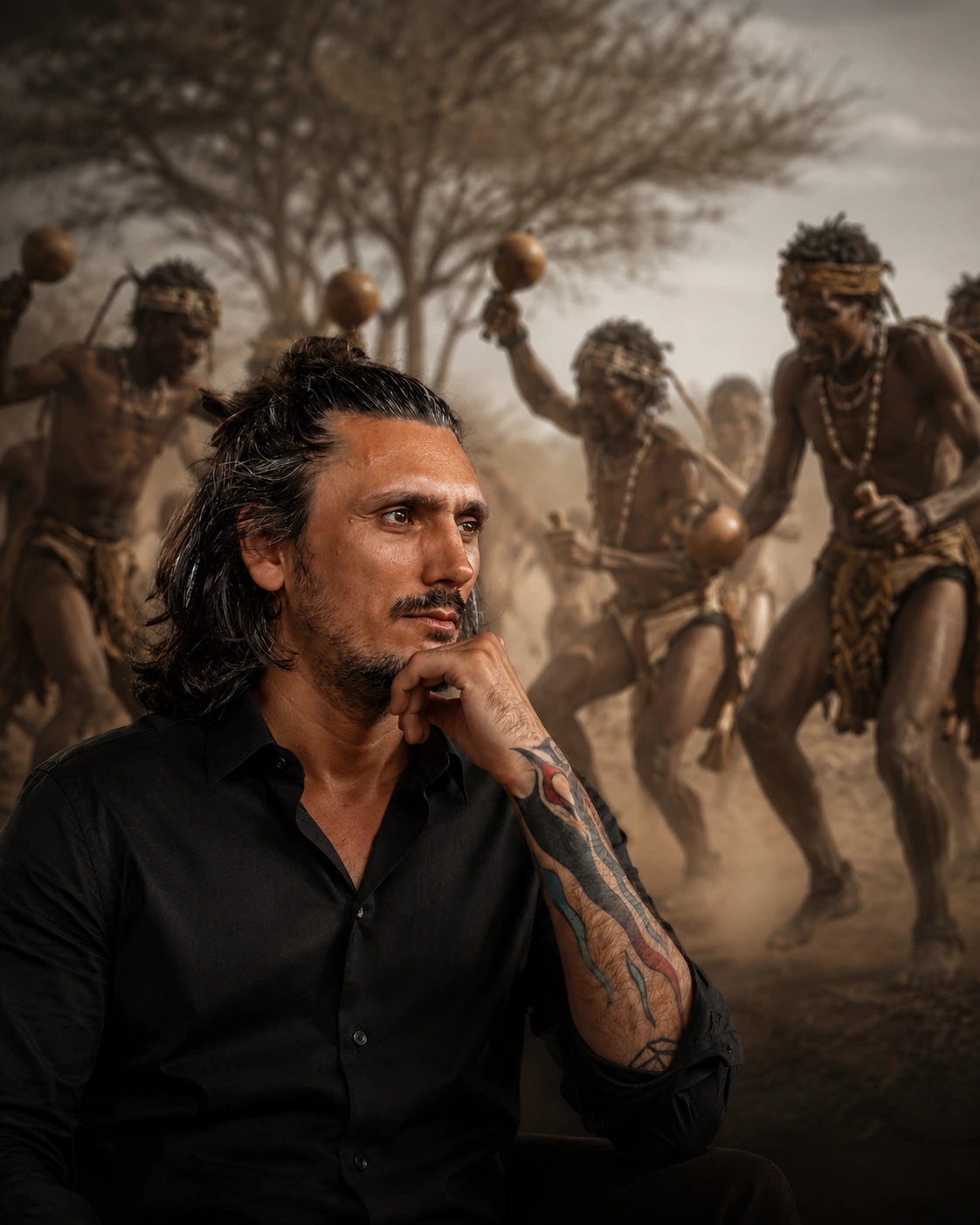
The San people dance for hours until their bodies begin to shake spontaneously, not as a performance for tourists, but as a form of communal medicine practiced for thousands of years. Seventeenth-century Quakers shook so intensely during prayer that the nickname became the name by which history remembers them. The Shakers, led by Ann Lee, built an entire theology around physical release as a sacred act. African American Pentecostal churches have understood for generations that genuine transformation doesn’t come only through the mind; it also comes through the body.
Western medicine systematically categorized these expressions as hysteria, neurological disorder, or religious primitivism to be dismissed. That classification says more about the limits of the Western medical model than it does about the value of these practices. Keeney’s work suggests that these communities didn’t discover something mystical or inexplicable. They discovered something deeply physiological, related to what contemporary science describes as neurogenic responses of the autonomic nervous system.
Why shaking isn’t meditation, and why you may need both
Keeney makes a distinction that I consider essential for anyone seriously working with nervous-system regulation. We’ve embraced Asian meditation practices, and rightly so, because their benefits for calm and mental clarity are real and well documented. But full nervous-system recovery doesn’t happen through inhibition alone, meaning simply bringing the system into stillness. It happens by completing the entire cycle: activation, discharge, and a return to balance.
Think of the nervous system as a bow that has been drawn and held under tension. Meditation helps it remain still within that tension. Shaking allows it to release fully and return to rest, completing the cycle that trauma, accumulated stress, or simply the pace of modern life interrupted before it could resolve.
It’s important to clarify that the somatic shaking described by Keeney isn’t the same as Gabrielle Roth’s 5Rhythms dance practice or Sufi whirling, although each of those practices has its own value.
Keeney’s somatic shaking, as well as the practice we teach through the Somatic Shaking Method, is more visceral, less performative, and more directly grounded in neurology. You aren’t creating something beautiful for an outside observer. You’re allowing the body to do what it already knows how to do, without interference from an aesthetic or spiritual agenda.
What it looks like in practice: nine steps without unnecessary mysticism
Here is a practical approach based on the process Keeney refined through decades of practice and field research. It includes several elements we also use in the Somatic Shaking Method, such as rhythmic breathing, rhythmic music, and reconnecting with positive feelings or memories.
- Step one: ground yourself in something positive. It doesn’t have to be a state of grace or a spiritual revelation. It could be a warm memory, a sense of gratitude, or love for someone close to you. The brain and nervous system move toward regulation more easily when the starting point is an internal resource rather than forced neutrality.
- Step two: play rhythmic music. External rhythm can synchronize with internal rhythms through a well-documented neurological process, not merely a poetic metaphor.
- Step three: let your eyes rest. Closed, open, or half-open: whichever position feels comfortable and safe for you is the right one. There is no universal instruction here.
- Step four: consciously activate your whole body. Deliberately move your muscles from head to toe, gently but attentively. You initiate the process; your body continues it.
- Step five: gradually deepen and quicken your breathing. Breathing changes the chemistry of the nervous system more quickly and directly than a cognitive technique or intentional thought.
- Step six: allow somatic energy to emerge organically. Don’t force it, and don’t stop it. If your body wants to shake, let it. If it wants to move in other ways, follow it with care.
- Step seven: continue while the process still feels active. There is no universally correct duration or timer to follow. Whether it lasts ten minutes or forty, let your body signal when the cycle has naturally come to an end.
- Step eight: take time to integrate afterward. Don’t immediately stand up or reach for your phone. Sit or lie on the floor if that feels right, and give your nervous system time to absorb and consolidate the experience.
- Step nine: practice regularly, not just occasionally. Once a day is ideal for sustained effects, with at least once a week recommended to maintain progress. Nervous-system regulation isn’t a one-time event. It’s a cumulative process that develops over time.
The main differences between the Somatic Shaking Method and the Shaking Medicine described by Keeney come down to complexity. In Somatic Shaking, we also use pandiculation, a form of somatic activation that can help initiate tremoring. We also use a powerful breathing practice called the physiological sigh (also known as cyclic sighing), a fast, natural breathing technique designed to reduce stress and calm the nervous system within seconds. It works by helping reinflate partially collapsed air sacs in the lungs and rapidly removing excess carbon dioxide.
In simple terms, the practice consists of two quick inhales through the nose followed by one long, slow exhale through the mouth. The first inhale expands the lungs, while the second “tops off” the alveoli that may have partially collapsed. The long exhale can support parasympathetic activity and help reduce sympathetic arousal.
Andrew Huberman helped popularize the technique, but the body also does it spontaneously under stress; those involuntary, sigh-like double inhales are an example of the same pattern. Research from Stanford University has examined the physiological sigh as a breathing practice and its effects on anxiety, mood, and well-being.
What actually happens in your body when you shake
When the body shakes, either spontaneously or through intentional practice, it may help the autonomic nervous system move through an activation cycle that previously remained incomplete. Supporters of the practice describe it as helping the body process stress activation, regulate vagal tone, reduce chronic hypervigilance, and restore balance between the sympathetic and parasympathetic branches of the nervous system.
In plain English: it may help the body release some of what stress has activated and what the body hasn’t yet processed through its usual channels.
This perspective is connected to broader work in somatic trauma therapy, from Peter Levine’s work on the body’s response to trauma to Bessel van der Kolk’s synthesis in The Body Keeps the Score, which argues that trauma can have lasting effects on the body and that recovery may need to involve bodily experience rather than relying exclusively on cognitive insight.
Keeney goes further, arguing that somatic release isn’t only therapeutic at the individual level; it’s also a social, communal, and, in the truest sense of the word, political act.
At one point in the book, he writes that “the greatest fear of despots is joy.” This isn’t simply a romantic metaphor meant to inspire. It’s an observation about the dynamics of social control. A person who knows how to release their body and live with genuine vitality is considerably harder to control through fear and suppression. Keeney calls this ecstatic form of movement the “Theater of the Life Force.” He describes it as transformative and alchemical, capable of forging a new world, as he writes:
“The way to change the world, the most important revolution that will transform hearts and souls, begins when people start dancing in the streets and call for the elevation of our spirit. If you want to change things, start humming, singing, and whistling. Music floating through the air will bring down the solemnity that sustains the tyrant’s totalitarian climate. Laugh to melt the edge of fear. Sing, and the guardians of morality will be silenced. The greatest fear of despots and dictators is joy. Bring in the clowns, the merry jesters, and the holy fools, and watch politicians be laughed out of office.”
Near the end, the author closes with a reverent appeal to the Divine: “Shake me, make me, take me.”
“Talking doesn’t cook the rice,” my Qigong teacher used to say.
If you’ve read this far and feel internal resistance, perhaps because it sounds too simple, too strange, or not suited to someone like you, try observing that resistance with curiosity instead of automatically obeying it. That resistance is part of what we’re talking about: the voice of a body that has been systematically taught that spontaneous release is dangerous or shameful.
You don’t need to adopt a particular belief system, identify with a spiritual tradition, or buy expensive equipment or courses to begin. You need ten to twenty uninterrupted minutes, a safe space with enough open floor around you, and a willingness to let your body do something it already knows how to do, something it has always known but may have forgotten under years of conditioning.
Somatic shaking isn’t a recently invented technique or a passing wellness fad. It’s an ancient form of embodied knowledge that may reawaken more easily than you imagine once you give it permission to exist.
If you’d like to explore this practice more deeply through detailed step-by-step guidance, resources, and the opportunity to work with us directly, join one of our weekly sessions.
Until next time… Shakers, Keep The Vibe Alive!
That Shakin' Guy