Let's Shake Hands: Free Connection Call 

What Is Shaking Meditation?
Table of Contents
WHAT IS SHAKING MEDITATION?
Meditation is commonly perceived as passive and static, you sit motionless, your mind blank, but the true definition of meditation is far more extensive than that. Moreover, it doesn’t function in the West the same way it worked in the East.
Recent studies reveal that the average human attention span on screens has dropped significantly to between 8 and 12 seconds, with some research suggesting it can be as low as 47 seconds. For children, attention span is roughly calculated as 2 to 3 minutes per year of age.
This dramatic decline in focus capacity is one of the primary reasons why many people claim that meditation doesn’t work for them. Their nervous systems have become overstimulated by constant digital input and their minds are fragmented across multiple distractions.
When they attempt to sit in stillness, it feels nearly impossible because their brains have been trained to expect perpetual stimulation and novelty. Shaking Meditation circumvents this modern problem entirely by abandoning the demand for perfect stillness and refusing to fight against the body’s inherent need for movement. Instead, it works synergistically with what is already happening naturally, the tremors, the swaying, the spontaneous discharge of accumulated tension.
Your body settles and regulates itself while your mind doesn’t have to strain for forced concentration, which is precisely why this approach succeeds where traditional static meditation often fails for contemporary practitioners.
Shaking Meditation is itself a practice that opens a different dimension of meditation. It activates your energy field, creates a powerful protective torus around you, and cleanses your chakras. This energetic protection shields you from negative energies in your environment.
Adrian Băjenaru, Author
THE SCIENCE OF SHAKING AND NERVUOUS SYSTEM REGULATION
Tantric and shamanic traditions embrace energy flow and movement as fundamental to practice. Shaking Meditation transcends the stillness of focused-attention meditation by honoring what your body naturally does when your mind goes deep, it moves, and this is a practice itself.
Tantrics call this ‘shakti’: the energy that moves continuously. You’re not just observing it anymore, you’re flowing with it, becoming part of the movement rather than remaining a passive witness.
Mindfulness meditation, which follows the Vipassana path taught by Siddharta Gautama Buddha and reinvented more recently by Goenka, involves non-judgmental observation of breath, bodily sensations, or mental phenomena.
Often, this detached observation can foster a tendency to escape from daily reality. I met a woman in Ubud a year ago, completely normal, a corporate worker who attended an intensive Vipassana meditation retreat. A year later, she was unrecognizable. She was on psychiatric treatment, forcibly struggling with tapping techniques just to participate in reality.
This is why Shaking Meditation really matters especially in a world changing so fast. It doesn’t allow dissociation. The shakes, the tremors, the sways, are anchoring you in your flesh, in the present moment, in what is actually happening. You can’t observe from a distance when your body is moving. You become the movement itself.
Somatic Shaking Meditation is not dynamic meditation as Osho taught it, because in his practice shaking is deliberate and controlled, whereas in true Shaking Meditation the movements emerge spontaneously while you remain seated in a meditative posture.
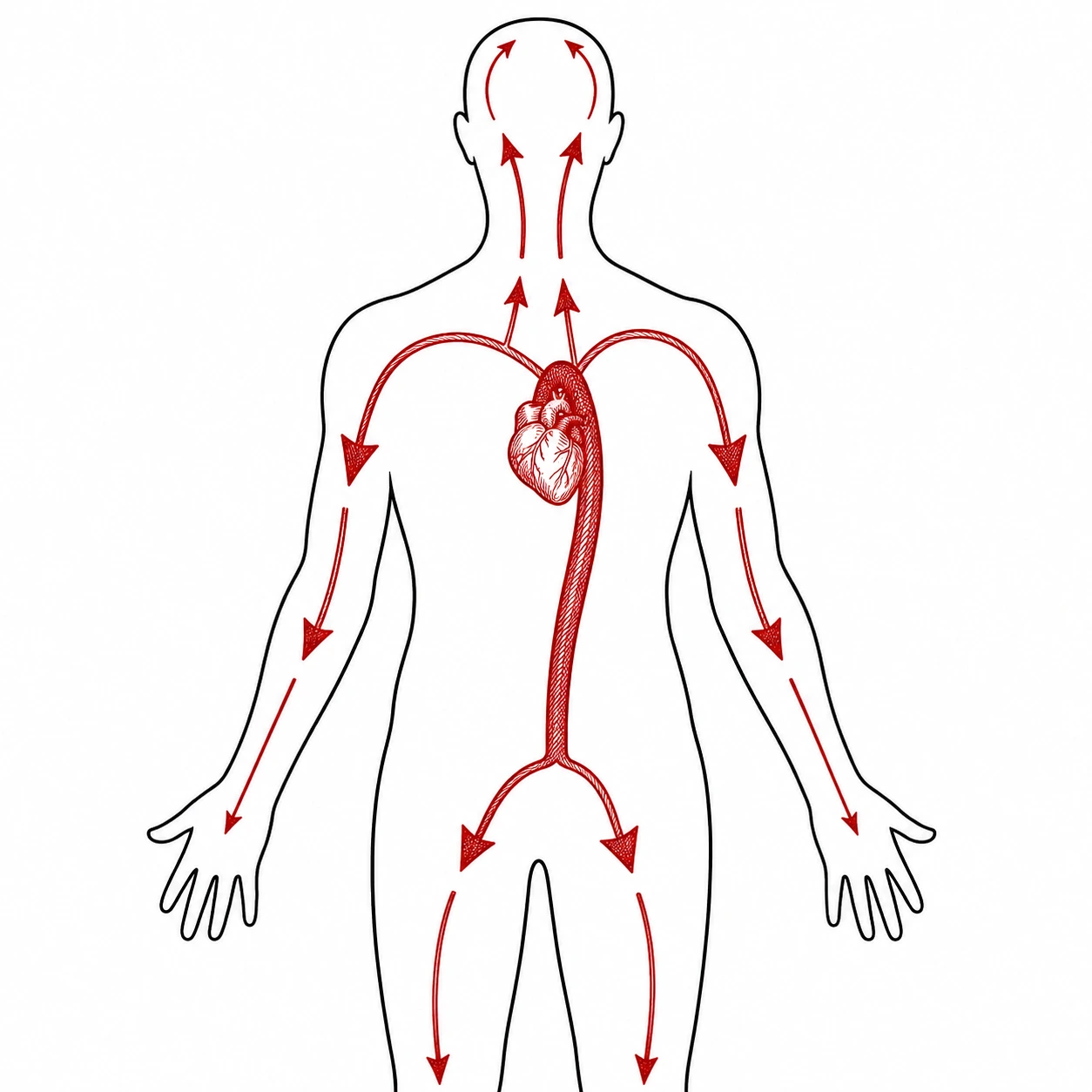
Medical engineer and meditation researcher Itzhak Bentov discovered that during relaxed meditation, blood pumped from the heart creates resonant vibrations in the aorta. The frequency matches perfectly, like a musical instrument vibrating in tune. This resonance is what triggers the body’s natural oscillations during deep practice.
Around 7 to 8 cycles per second, this vibration emerges, subtle but rapid. Your coccyx or solar plexus may register it first. From there, resonance extends it throughout your body, moving up and down. During meditation or deep rest, you feel it often. Sometimes you wake and your bed vibrates alongside your aorta. The phenomenon is documented in Bentov’s research on meditation and consciousness.
WE WERE ALL SHAKING IN OUR MOTHER'S WOMB
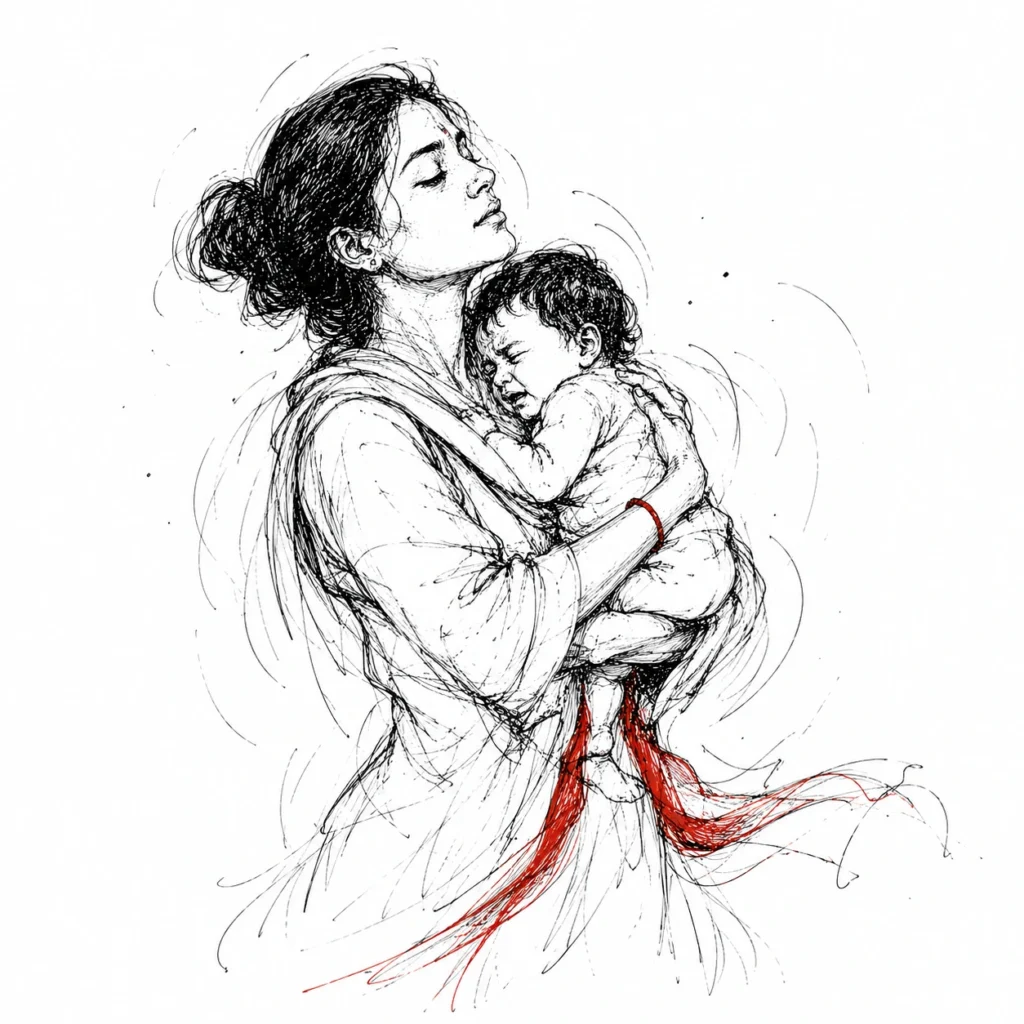
I remember when I was a child, my grandmother had the habit that whenever I cried, she would rock me on a rocking chair or in her arms. It naturally sparked a feeling of well-being, inner calm, and inner peace. All my tears would fade away as if by miracle in those gentle movements that seemed to numb all my fears.
A mother calms her child through rocking, carrying, and rhythmic movement—this is supported by science. The body learns safety through rhythm, warmth, and movement. Movement becomes one of the earliest languages of regulation.
A classic 1986 study found that babies carried for longer periods cried less overall, especially during evening hours. Being carried helps the infant body return to regulation.
Children sway, rock, bounce, and move rhythmically because movement regulates the nervous system. Rhythmic movement is one of the earliest forms of self-soothing humans develop.
A baby spends months in the womb experiencing constant motion, the mother’s walking, breathing, heartbeat, shifting posture, the rhythm of her nervous system. After birth, rocking, carrying, bouncing, and swaying continue that regulation. The child’s brain associates rhythmic movement with safety, calming, and connection.
The vestibular system, the inner-ear system involved in balance, orientation, coordination, and arousal regulationm is stimulated by rhythmic movement. This stimulation calms and organizes the nervous system.
Children naturally rock before sleep, sway when stressed, spin, bounce, hum while moving, or rhythmically shift weight while thinking, this is natural self-regulation. Crawling, rocking, rolling, spinning, and swaying help children build spatial awareness, motor coordination, body mapping, emotional regulation, and attention control.
In some children, stronger repetitive swaying or rocking can link to fatigue, overwhelm, anxiety, sensory seeking, ADHD, autism, or rhythmic movement disorders. But context matters here, because the same movement can be healthy regulation in one child and a sign of overload in another.
Adults still do versions of this:
- pacing
- leg shaking
- rocking in a chair
- swaying to music
- walking to calm down
- dancing
The nervous system regulates through rhythm and movement long before language or cognition. This is why your grandmother rocked you. This is why your body sways during deep meditation. Movement is how the nervous system learns to feel safe.
I’ve noticed that even Buddhist monks while meditating begin to sway from one side to the other like a biological pendulum. Shaking Meditation refers to the state of involuntary swaying that generally appears through following the spinous energy flows of kundalini energy rising up the spinal column.
Following these flows is not mandatory. The swaying can be semi-voluntary at first and become uncontrollable, violent, and complete. There are cases where energy on the meridians (nadis) begins to flow, and especially when they are interrupted and become unblocked, powerful tremors can appear, as described on the Dhamma Wheel forum where a practitioner asked:
"Anyone know why there is violent shaking during meditation? I've been staying with the Breath for 2 days off the cushion 24/7 + 1-2 hour sitting meditation and my body is violently shaking to the point where I had to stop meditating. It's almost like Parkinson's involuntary trembling. I thought maybe I am just in a bad angle but I noticed even with a straight posture it starts trembling from within in waves then just violent waves all over my body. It's too much. Like an earthquake. I have experienced this before but stopped meditating for a while and now that I picked it up again the strong vibrations are shaking me."
WHAT IS pīti ('energisation')?
When you shake during or after meditation, you might be experiencing pīti. Buddhist teachers call this “energisation”, your mind pulls inward, releasing stored energy your body expresses as tremors.
This is normal. Many serious practitioners experience it. The shaking passes naturally, like a storm clearing. After, you feel deep calm and peace, sukha, because your mind seeks the pleasant state. If your practice is long and intense, shorten it. This reduces the intensity. Paul Dennison discusses this in his work on meditation states, Jhana Consciousness: Buddhist Meditation in the Age of Neuroscience.
"When I meditate, my whole body starts shaking. What does it mean?"
"I've been meditating for 60+ years using a variety of meditation techniques. There are shakes, jerks, and other body movements that, in Hinduism and Buddhism, are called kriyas ('sudden movements'). They clear the nervous system and muscles. They are safe and okay, even good, if you are able to decide to stop them by stopping your meditation. If you can do this, then you safely may let them happen. I experience them often, usually just for a second or two, now, in the past I've had much longer ones that lasted for many minutes. At any point in time during them, I was able to stop them.If you can't stop them by ending your meditation or standing up and walking, then cease doing that kind of meditation, and if they continue uncontrollably, see a doctor.Another possibility is that when you meditate, you are holding your breath or breathing too shallowly. To test this possibility, learn to breathe more deeply and regularly as you practice your meditation."
how shaking meditation really works?
- Physical release: As your body sways and shakes in gentle, rhythmic motions, muscle tension dissolves. Stress and anxiety held in your tissues discharge. What was tight becomes soft. Calm settles naturally.
- Emotional discharge: This swaying and shaking isn't just physical movement. As your body rocks, stored emotions surface: rage, worry, frustration, and release through the rhythmic tremors. What was trapped becomes free.
- Nervous system reset: The swaying and shaking activates your parasympathetic nervous system, the system that brings calm. Your body shifts from fight-or-flight to rest-and-digest. Tension eases. Peace emerges.
HOW TO PRACTICE SHAKING MEDITATION?
The shaking begins small, then gradually increases and becomes wider. It starts as small loops and expands into larger, more expansive movements. Sometimes your meditation naturally ends and the shaking calms down on its own.
1
Assume a meditative posture.
2
Strike your coccyx area gently without injuring yourself to activate vital energy, then place your palm on the crown to resonate with opposite polarity.
3
Observe the tremors and subtle swaying, especially along the spinal column.
4
Allow your body to move naturally. If movements don't arise, don't force them. You can make semi-voluntary movements at first — forward, back, left, right — if that helps.
5
Once movements begin, they'll flow like a random pendulum. Let them amplify without modifying them. You're both observer and participant simultaneously.
Until next time… Shakers, Keep The Vibe Alive!
That Shakin' Guy

Adrian Băjenaru
Somatic Shaking™ Method Founder • Neurogenics & Bioenergetics

Dear Adrian, Thank you for your article! Thank you also for visiting my meditative movement website and leaving a comment on my article about Qigong Shaking as a simple way to incorporate simple meditative movement into your life. I especially appreciate your point that the body shakes naturally and that we shake unconsciously as part of natural movement and as a response to life — e.g., when we shiver in the cold or feel fear or awe or when we sway to music or dance and tap our feet hearing music that moves and touches us. Though shaking is natural, it is powerful to shake on purpose and with intent. It is a way to engage our consciousness in an embodied way that feels oceanic and total. The whole self, the whole being, is engaged. The natural movement of healing and transformation can flow freely. May your practice and teaching extend far and wide and touch many lives!
Somatic Blessings of Boundless Qi. -Josie