Let's Shake Hands: Free Connection Call 

Why Is Kundalini Coiled Three And A Half Times?
Table of Contents
What Is Kundalini?
Kundalini appears as a serpent because the movement of energy in the body follows a wave pattern. When you activate this process through breath and internal focus, the energy does not move in a straight line. It rises in pulses, similar to how a snake moves across the ground. This gives a direct and functional explanation for the symbol.
The image of the serpent holding its tail in its mouth represents a closed loop. This reflects how most people live. Your energy circulates within fixed patterns, shaped by habits, beliefs, and emotional conditioning. You operate within limits that keep your system stable but restricted. This state does not allow full expression of your physical, mental, and energetic capacity.
When this loop opens, your system begins to reorganize. You experience shifts in perception, attention, and internal stability. This process requires discipline and consistency. You work with breath, body awareness, and nervous system regulation. The goal is not sensation. The goal is coherence and control.
Many people associate kundalini with pleasant states such as bliss or emotional highs. These states appear during activation, but they do not define the process. A temporary feeling does not indicate a structural change. You measure progress through stability, clarity, and the ability to maintain a regulated state under pressure.
If you want to work with this energy, focus on your body first. Build sensitivity. Train your attention. Develop control over your breath. Your system responds through repetition and consistency, not through intensity or belief.
The number 3 ½ and kundalini
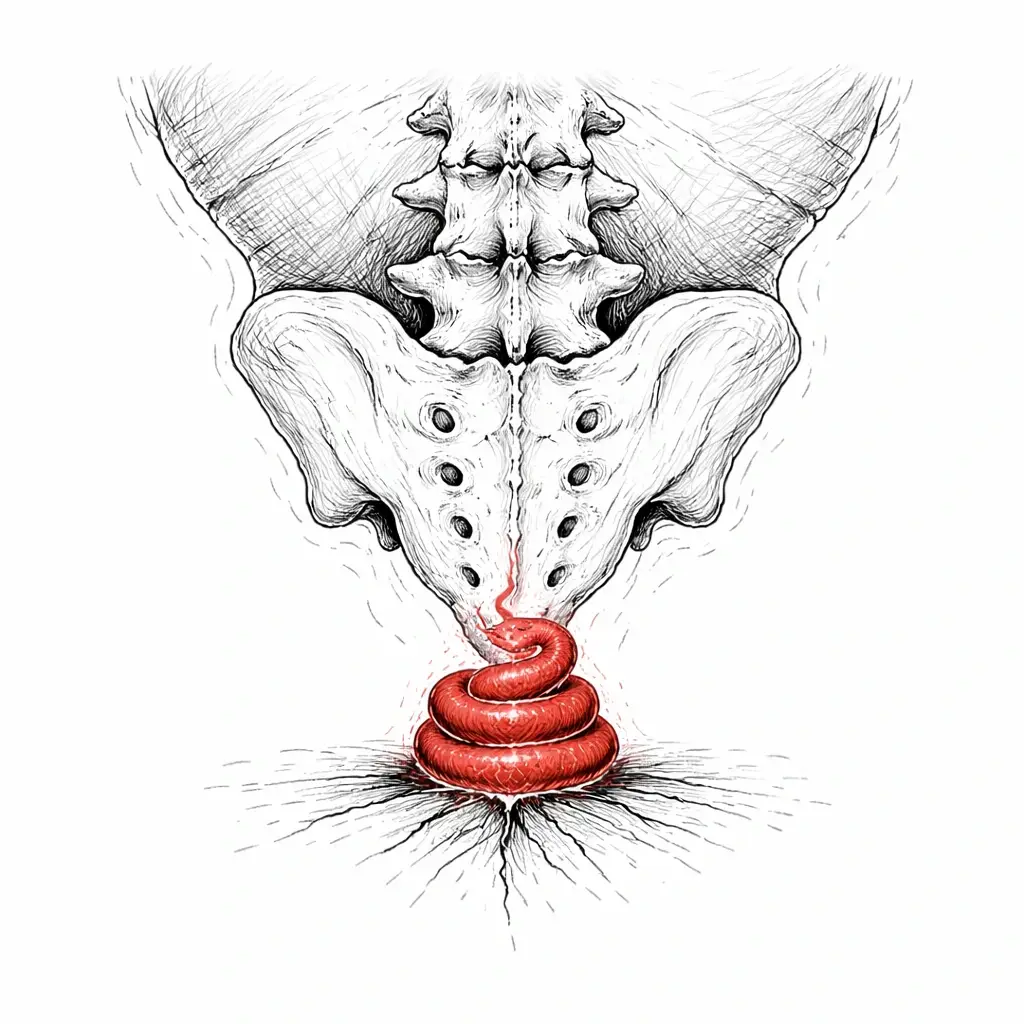
Kundalini is often described as a coiled serpent resting at the base of the spine, shaped in three and a half turns, where the half turn points to continuity and expansion, reflecting a movement that extends beyond fixed limits and expresses the infinite potential within your own system.
Think of it like a spring, fully coiled, stored energy, slightly open, because it’s about to release.
When this energy activates, it begins to move upward along the spine in a gradual and organized way, passing through different centers of the body and influencing how you feel, perceive, and respond. As it rises, you may experience the release of tension, shifts in emotional patterns, and increased clarity, as areas that held resistance begin to reorganize and function more coherently.
INTERPETATIONS.
The most common interpretation: the “half coil” = movement & potential.
- 3 coils → stable, contained energy (latent power)
- + 0.5 → not fully closed → ready to move, awaken, unfold
From an esoteric perspective: reality & transcendence.
- 3 coils = fundamental forces or layers of reality (often linked to the 3 gunas: sattva, rajas, tamas)
- the 0.5 = transcendence beyond them
From this perspective, Kundalini is the force that created the world and is also the force of liberation.
There’s also another angle of interpretation, stating that humans are living in a partial state, conditioned and patterned. The 3.5 coils represent dormant consciousness not yet fully expressed.
The “half” implies: → you are not finished → something in you is still unfolding.
Another view derives from a sacred geometry interpretation, where “Kundalini” literally comes from a word meaning “coiled” or “circular”.
The spiral itself matters:
- spiral = growth pattern in nature (DNA, galaxies, shells)
- 3.5 turns = compressed spiral of life force
People who work with kundalini often report a clear, repeatable pattern in the body. You may feel a buzzing sensation in your hands, a subtle vibration in the spine, or a constant tone in your ears when the energy becomes active. These signals show that your nervous system is engaged and processing internal activation. With consistent practice, you start to recognize how this energy moves and how your body responds to it.
You train this process through repetition. Breath, attention, and structured practices guide the movement of energy from the base of the spine toward the head. Over time, your body becomes more efficient at conducting this flow. What starts as random sensation becomes organized movement. Many people notice spontaneous postures or movements appearing during practice. Your body uses known patterns such as stretches, contractions, or pressure points to direct energy upward and release internal resistance. You may also observe that specific positions or movements appear without conscious effort. For example, your legs may wrap or press in certain ways, or your spine may adjust itself. These responses come from internal coordination, not from learned behavior. The body applies pressure, tension, or alignment where needed to move energy through blocked areas. This reflects a built-in mechanism that supports regulation and flow.
Sound and vibration play a role as well. Low-frequency sounds, humming, or the repetition of a tone such as OM often create a clear starting point for activation. You may feel the vibration begin in the chest or solar plexus and spread to other areas. When you direct attention to different centers in the body, you increase awareness and sometimes trigger release in those areas. This process helps you identify where tension exists and how your system responds when it begins to open.
Physical sensations alone do not define the process. Many practitioners report that while the sensations are intense, their main focus shifts toward clarity and understanding. As your system adapts, you notice changes in perception, attention, and internal stability. These changes often feel more relevant than the sensations themselves. The body becomes a tool for accessing a deeper state of awareness.
You may also notice rapid changes in your physical state. For example, a short activation can shift you from fatigue to alertness within minutes. This happens because your nervous system reorganizes quickly once energy begins to move. These shifts show that the process affects both physiology and mental state.
As you progress, your relationship with thinking changes. You rely less on analysis and more on direct experience. Words and explanations begin to feel limited compared to the internal state you access through practice. At the same time, communication with others who follow a similar path remains useful, because shared experience helps you stay oriented and grounded.
If you work with this process, focus on consistency and observation. Track how your body responds, how energy moves, and how your state changes over time. Sensations will come and go. What matters is your ability to stay stable, aware, and responsive as your system evolves.
Until next time… Shakers, Keep The Vibe Alive!
That Shakin' Guy