Let's Shake Hands: Free Connection Call 

Kundalini Awakening Symptoms
Table of Contents
KUNDALINI IN DIFFERENT YOGA PATHS
Kundalini awakening expresses itself differently across the classical paths of yoga. Each one highlights a layer of the same process: body, perception, emotion, and mind.
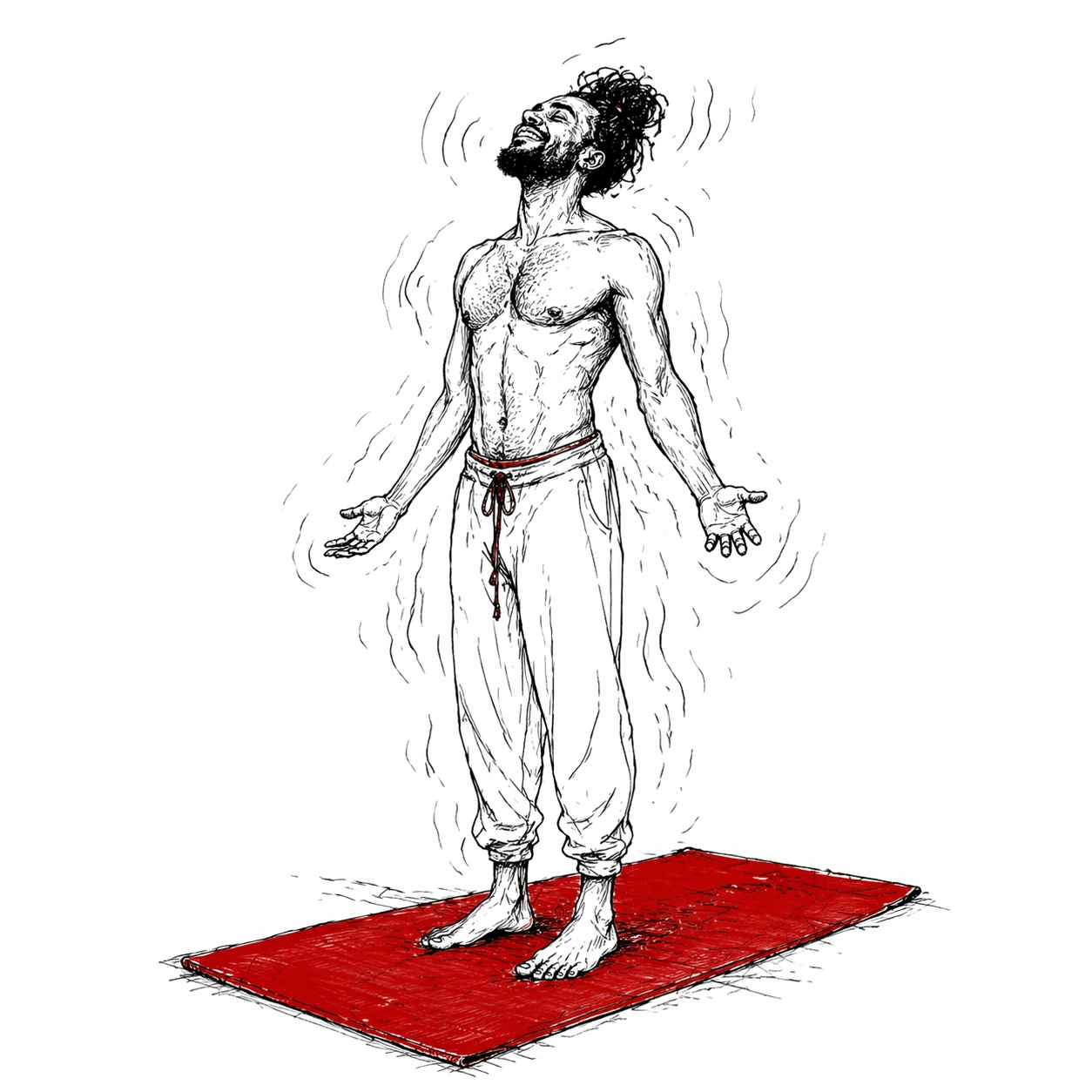
KRIYA YOGA
A method centered on breath control, energy circulation, and internal focus. It uses structured techniques to influence the nervous system and direct prana through the spine with precision and discipline.
Core physical symptoms:
- shaking, trembling, spasms
- involuntary movements (twisting, bending, spontaneous postures)
- sensations of heat, cold, tingling, or energy moving in the body
- pressure along the spine, sacrum, chest, or head
- changes in breathing (deep, irregular, held, or forceful)
- spontaneous emotional release (crying, laughing, sighing)
- tension or release in jaw, throat, diaphragm
- digestive changes or internal contractions
- fatigue alternating with bursts of energy
Additional possible experiences:
- dizziness, head pressure, or headaches
- sleep changes (excessive sleep or restlessness)
- body feeling heavy, light, expanded, or unstable
- dry mouth or increased thirst
LAYA YOGA
A path of absorption and dissolution. It works with sound, attention, and subtle awareness to dissolve mental activity and merge the individual mind into a deeper field of consciousness.
Core perceptual symptoms:
- inner lights, colors, geometric patterns
- internal sounds (buzzing, humming)
- spontaneous imagery or dream-like visions
- altered sense of body boundaries (expansion, shrinking, dissolving)
- heightened sensitivity to sensory input
Additional possible experiences:
- time distortion
- vivid internal scenes or symbolic imagery
- deep internal silence alternating with sensory intensity
BHAKTI YOGA
A path of devotion. It uses emotion, surrender, and connection to a higher principle or form to transform the inner state and stabilize attention through feeling rather than technique.
Core emotional symptoms:
- waves of love, devotion, gratitude
- increased compassion and emotional sensitivity
- emotional releases (grief, joy, overwhelm)
- intensified pleasure and sensuality
- rising sexual or creative energy
Additional possible experiences:
- states of bliss or deep emotional openness
- stronger connection to others
- heightened empathy and relational awareness
- oscillation between expansion and vulnerability
JNANA YOGA
Core mental symptoms:
- spontaneous insights and realizations
- deep questioning about life and identity
- increased clarity and focus
- creative flow (ideas, writing, solutions)
- shift in priorities and perception of meaning
Additional possible experiences:
- intuitive pattern recognition
- periods of silence followed by mental clarity
- strong drive to express or articulate insights
SCIENCE BASED APPROACH.
In science, “kundalini awakening” is usually framed as a “spiritually transformative experience” affecting the nervous system (Woollacott et al.).
Category A. Physical / nervous system symptoms:
- Involuntary movements, shaking, unusual muscle activity
- Changes in temperature, heat, cold, energy-like sensations
- Altered breathing patterns
- Autonomic nervous system shifts (sympathetic ↔ parasympathetic)
- Strong sensations along spine / body axis
Category B. Emotional + psychological effects0
- Emotional release (crying, fear, bliss)
- Heightened sensitivity (sound, light, touch)
- Identity shifts / meaning-making
- Trauma surfacing
C. Cognitive / perceptual changes
- Visions, inner imagery
- Increased creativity / insight
- Altered perception of time/self
KUNDALINI AWAKENING SYMPTOMS WHILE DOING SOMATIC SHAKING
Kundalini-related symptoms that overlap with somatic shaking can appear both during practice and as ongoing aftereffects. Students often report spontaneous, involuntary motor and sensory responses, including tremors, rhythmic shaking, waves of contraction and release, and movements that arise without conscious control. During practice, these responses tend to intensify as activation builds.
Over time, they can also appear outside of practice as carryover states, showing that the system continues to process and reorganize. Alongside movement, students describe shifts in internal sensation such as heat, cold, pressure, or currents moving along the spine or through the body. From a physiological perspective, these patterns reflect autonomic activation and discharge, where the system moves between arousal and regulation, engaging motor, sensory, and affective layers at the same time.
There are also resources I have selected based on direct observation, described in my article “How do you feel when kundalini awakens,” grounded in my medium to long-term experience with Kundalini energy and aligned with scriptural references.
- Maxwell, R. W., & Katyal, S. — Characteristics of Kundalini-Related Sensory, Motor, and Affective Experiences During Tantric Yoga Meditation
- Giridharan, S., Kumar, N. V., & Bhana, R. — The Impact of Kundalini Yoga on Cognitive Function and Memory: A Systematic Review of Randomized Controlled Trials
- Woollacott, M. H., Kason, Y., & Park, R. D. (2020). Investigation of the phenomenology, physiology and impact of spiritually transformative experiences: Kundalini awakening. Explore. https://doi.org/10.1016/j.explore.2020.07.005
Until next time… Shakers, Keep The Vibe Alive!
That Shakin' Guy